Now let's say it's a late afternoon, and you're driving home at the end of a long hard day at the office. One day, your vehicle's dashboard illuminates like a tree with fairy lights, the engine stalls and you gently glide to a stop on the shoulder of a very busy highway. The initial response you may have is frustration and panic. A few minutes later, while you're checking under the hood, or discovering that you have a flat tire, the inner dialogue starts. If you do call a tow man, or do call a friend with a truck, pick up a rope that looks kind of like they use to make a bow tie, and see if you can get on top of it?
When it comes to dealing with a tow, some drivers will make impulsive decisions to avoid paying a towing cost. But the "quick and easy" solution to cut costs quickly becomes a logistical nightmare that can cause thousands of dollars in mechanical damage, serious legal penalties or physical injuries. Vehicle recovery is no weekend pastime; it demands specialized equipment, extensive training and a knowledge of physics and road side safety.
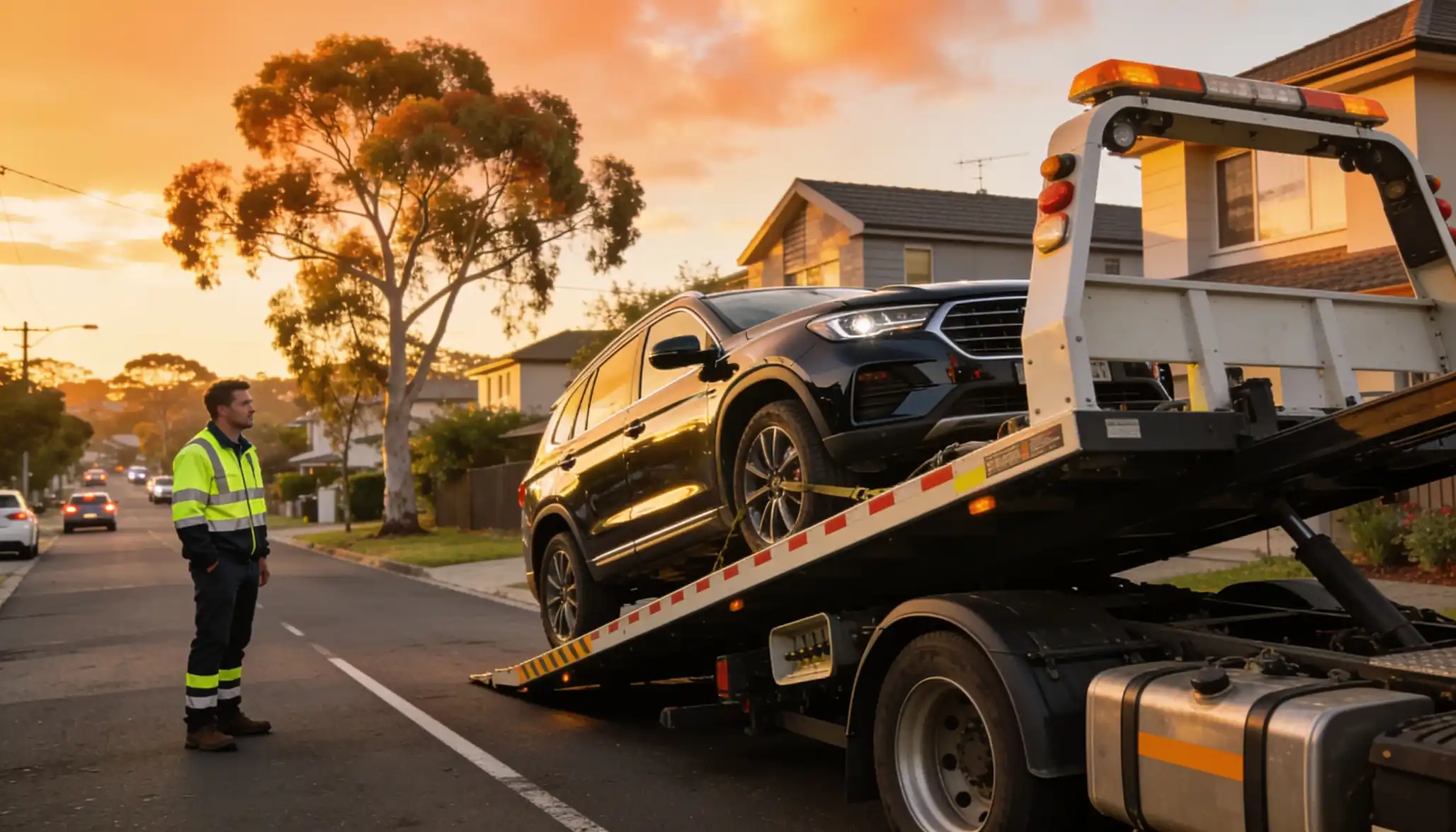
The Physics of a DIY Tow Gone Wrong
Most people think that any big rig can safely tow another car, but that is not the case. A hardware-store chain, an unrated nylon rope, or a tie-down strap attached to a disabled vehicle when it is hooked to a friend's pickup truck is a rolling hazard.
Braking physics; first consider. The standard car is designed to stop. Without a professional tow bar or integrated braking system, the driver of the first vehicle carries the kinetic energy of two vehicles, when the car is hitching a ride behind a truck that is not disabled. If the disabled car is behind the lead truck and the lead truck brakes suddenly, there is no automatic system to slow the brakes down. Often producing rear end collisions, crumpled bumpers and wrecked radiators before the vehicles reach a mile of pavement.
In addition, poorly connected points can lead to structural failure. There are crumple zones built into vehicles to absorb impact energy in a collision. They are not meant to be subject to great concentrated pulling stresses from a tow chain connected to a random suspension component or a plastic bumper guard. If a mechanic pulls on the wrong end of the control arm, the part can be torn off, a bend in the frame can be caused, and the transmission pan can be ripped and the case becomes a total loss.
The Roadside Environment Is Not on Your Side
As well as the mechanical threats, the roadside environment is a hostile place for a mechanical accident. A highway's shoulder is one of the most hazardous areas for a person to stand. Distracted driving is at an all-time high, with people constantly drifting across fog lines, navigating with music or a passenger's attention or texting.
Attaching a makeshift tow line to the front of your car while you are trying to change a tire in the path of oncoming cars, or spending 20 minutes crawling under your car to connect a tow bar, are both ways that you are taking the risk of being hit by oncoming cars while traveling at highway speed. Professional towing companies are equipped with the knowledge of "traffic incident management." They are well aware of how to place their large, highly visible flatbeds to serve as a physical barrier between the disabled vehicle and oncoming traffic. They are required to wear high-contrast, high-visibility clothing for visibility, have powerful LED strobe lighting warnings for your safety, and do whatever they can to get you off the ground as fast as possible.
If you break down on a freeway shoulder specifically, our Monash Freeway breakdown safety guide covers the exact steps to stay safe until a tow arrives.
What a Licensed Towing Company Actually Brings
With a licensed, insured towing company, the call isn't just about getting a ride; it's about ensuring your valuable asset is handled with precision. Specialized equipment is used on the job that has been designed specifically for your vehicle's drivetrain. Flatbed Towing is the standard for all-wheel-drive (AWD) vehicles (see our guide on safe AWD car towing) , luxury cars, and SUVs. The car is securely loaded onto the truck bed with all wheels off the ground. This means that there is no chance of any friction from the drivetrain, burning in the transmission, or wearing out tires in transit. Wheel-Lift Towing: These are used in tight spots, parking garages and on short distances and lift the vehicle by its wheels instead of its frame or axle. This helps ensure that there will be no damage to the alignment of your car or any scrapes to the clean paint or chrome work on your car's exterior.
Choosing correctly matters even more for flatbed towing vs wheel-lift towing on an electric vehicle, where the wrong method can damage the motor through regenerative braking. Our guide on Tesla towing explains what to tell the operator before recovery begins. The same logic applies to a vehicle bogged in grass or mud: our vehicle recovery towing Melbourne guide explains why a DIY pull can make bogging worse.
This applies just as much to two wheels as four: a bike can't stand on its own, so see our Emergency Motorcycle Towing guide before letting anyone but a professional load one.
In addition, the reputable towing company will also have extensive liability insurance. If there is damage to the vehicle while being loaded or hauled, the towing company's insurance takes over the repairs. When helping you pull a vehicle and your friend's car is damaged, you are liable for the repair bill and an awkward conversation can forever damage a valuable relationship.
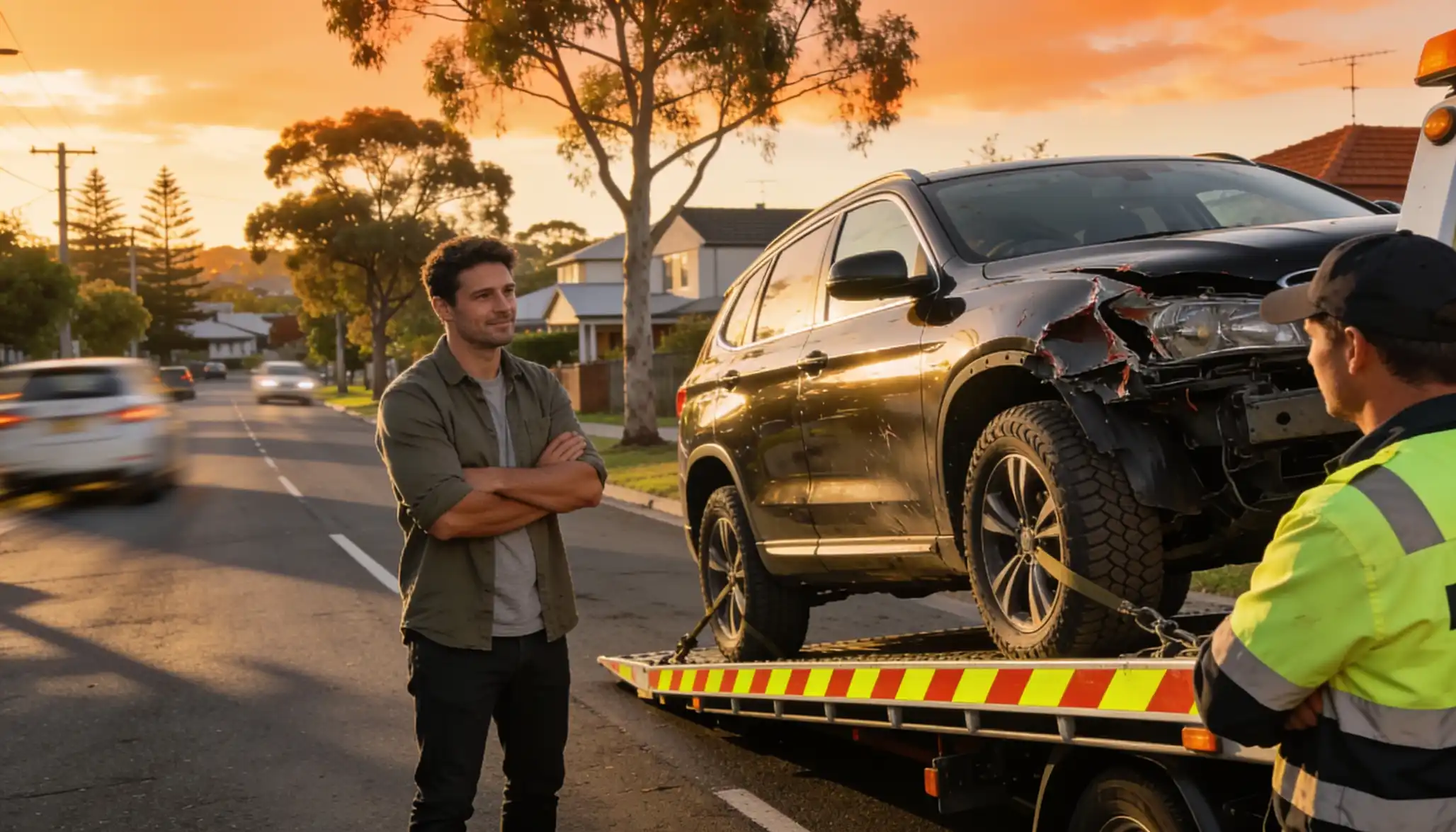
The Legal Risk of Amateur Towing
Others aren't aware that depending on your local jurisdiction, amateur towing could be legal or illegal and very heavily fined. Police officers often block traffic that they think is trying to tow vehicles with ropes or straps attached to them, as it poses an immediate hazard to public safety.
It's also worth knowing that licensed operators have their own legal boundaries. Our guide on refuse a tow after accident situations explains when a professional can say no, and when they legally can't. Our guide to an insurance tow after an accident covers the paperwork that follows.
Most states and municipalities have regulations that towed vehicles must be equipped with operational taillights, turn signals, and a safety chain system that is in compliance with the law between the two vehicles. When your car has no power, your flashing lights will eventually use up the battery and you will find yourself in the dark of night. Being ticketed for a traffic offense is not only a considerable new expense to deal with but most often the police officer will also force the impound tow, so you will be paying double the amount.
Money Reality: Towing vs. Avoidable Repairs
A typical local tow service charge may include the cost of a flat rate plus a fee for every mile the vehicle is towed. This may appear like an expense they don't need for a person looking to protect their wallet.
When you consider this in this light, hiring a professional towing company to save your car's life is an effective act of financial protection, rather than a costly luxury.
When stranded: If you are stuck, the best thing to do is to move as far away from the road as possible, turn on your flashers and contact a professional towing company.
- Stay In the Vehicle: If parked on the busy highway shoulder, stay secured in the seat with the seat belt on. The metal cage of your car offers a lot more protection than standing on top of the asphalt.
- Keep Your Wheels Turned: rotate the front steering wheel away from the road. If someone backs into your parked car, it will push your car back into the ditch, not into the road.
- Know Your Location: Be familiar with landmarks, exit signs or mile markers near your location so the dispatcher can direct the closest truck to you.
Conclusion: Peace of Mind Has a Number
Vehicles are heavy, complicated pieces of equipment and they can't be recovered without special equipment and trained personnel.
Do not endanger yourself, yourself financially or your peace of mind by trying to complete a high-risk roadside recovery without assistance. If it happens at 100 km/h, our stranded on the Monash or West Gate guide is the one to follow.
Frequently Asked Questions
Answers to common questions about DIY towing risks and professional vehicle recovery.
Why is it cheaper to call a tow truck than to have a friend tow my car with a rope?
Yes, absolutely. A flat tire on the road while you are being towed by a friend with a tow strap or tow rope may feel like free, but it often leads to thousands in car repairs. Common mistakes that amateurs make include using the wrong anchor points, thus ripping off bumpers, bending steering linkages, or even damaging suspension parts in your car. In addition, if your transmission gets ruined from improper flat towing, then you will have to pay to get it repaired or replaced. When you call a professional towing service, you can make sure that your vehicle is lifted or hauled on the flatbed correctly, otherwise you will have to deal with a big repair bill.
Why is it a good idea to use professional towing?
One of the worst spots to be is on the side of a busy highway or road. The tow truck operators are trained professionals and their trucks are highly visible with heavy duty towing equipment and building high visibility training in safety. They can park their trucks to block the view of oncoming traffic and connect your car to their trucks in mere moments. Attempting to deal with a breakdown alone or with an under-trained friend exposes you to the risks of distracted driving.
Does hiring a tow company risk damage to my car's warranty or impact my insurance policy?
No, rather the opposite. Insurance companies would like to see that you are hiring licensed, insured and professional towing companies as this reduces the risk of any further damages to the vehicle. If you attempt to tow the vehicle and end up causing an accident or additional damages, your insurance company may refuse to cover this part of the damages. A good tow truck company is going to generate a paper trail, an invoice and a receipt; all of which are easily accessible and can be sent to your roadside assistance or insurance company for reimbursement.
Save the phone number of a reputable local towing company in your cell phone so if the unexpected occurs, you can leave the towing to the professionals.