Imagine it's 11:30pm on a rainy Tuesday. Your dependable sedan has broken down on the shoulder of a busy highway, your phone battery is low, and you just want to get home. You open your rideshare app, see a spike in pricing, and freeze. Then an "idea" you claim is brilliant occurs to you: why not call Mike? He has a pick-up truck and a tow rope.
It seems like a great idea. You save some money, Mike gets to be the hero, and you laugh about it later. Unfortunately, it isn't a buddy comedy. A seemingly harmless favour is a high-risk path to costly vehicle damage, dangerous situations on the road, and a badly strained friendship. Before you dial your best mate's number, here's why a DIY tow is an absolute disaster waiting to happen.
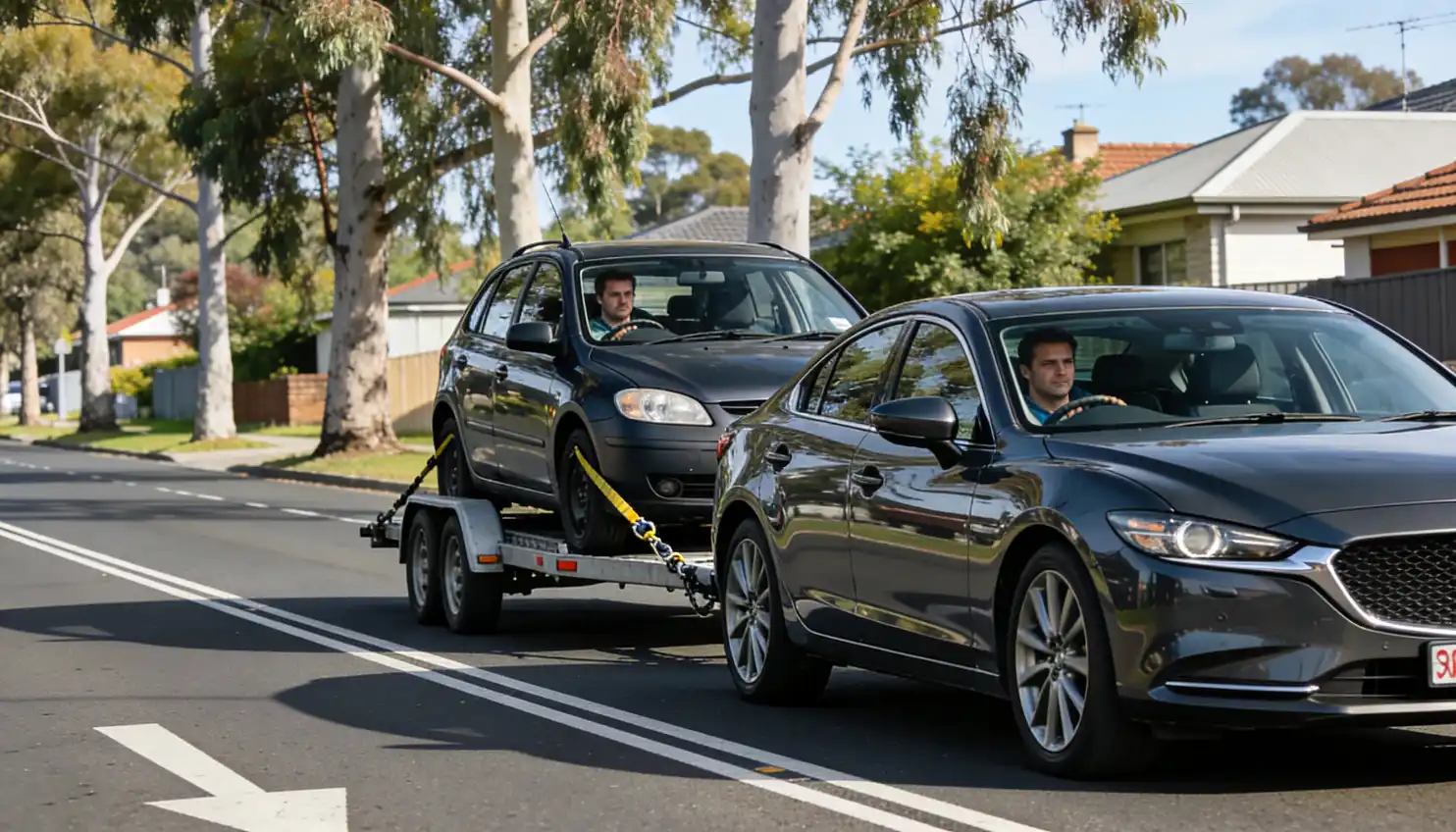
Towing Is Difficult: The Physics You're Ignoring
Most people assume towing is just tying two vehicles together and driving off. The truth is, moving a disabled two-tonne machine is a matter of weight distribution, braking physics, and kinetic energy. A professional tow truck attaches a vehicle using equipment that evenly distributes weight. If Mike is using a cheap nylon strap from a hardware store, you're relying on luck.
A car that isn't running has no power steering or power brakes. That means the driver of the towed vehicle has to grip the wheel and press the brake pedal with real force just to avoid rear-ending the lead truck. One mismatched reaction at a stoplight, and your front bumper ends up in the back of your friend's tray.
You'll Most Likely Damage Both Cars
Calling a friend for a tow doesn't just put your car at risk, it puts theirs at risk too. Passenger trucks and SUVs are built to carry loads or tow trailers using the correct hitch, not to drag a dead, rolling object from a standstill or up an incline.
Common Mistakes Made in a DIY Tow
- Overheating: great force on the pulling vehicle can send the transmission into overheating.
- Ripped bumpers: attaching a tow line to a plastic bumper or a weak suspension point destroys it instantly.
- Frame damage: a chain wrapped around the wrong undercarriage part can bend the frame of either vehicle and wreck its alignment.
A transmission failure or a bent frame can run into thousands of dollars. That "free" tow with a mate is often the worst money mistake you'll make all year.
The Legal and Insurance Risks Nobody Warns You About
Now let's talk about the part everyone ignores until it's too late: legal liability and insurance. Towing with a simple rope, strap, or chain on public roads is illegal in almost every municipality. Most jurisdictions require a proper tow bar, safety chains, and working tow lights to move a vehicle legally. Get pulled over with a makeshift rig and you and your friend could both be looking at heavy fines, or a car in an impound yard.
It gets worse if there's an accident. If your car breaks loose and hits a parked car, or you rear-end your friend's truck, your insurer probably won't cover it. Most policies explicitly exclude damage caused by non-professional towing, which leaves you and your friend covering the bill yourselves.
How to Say "Sorry" for a Cracked Windshield
While the dents in the cars are bad enough, the cracks in the friendship are far more lasting. Even the closest friends end up in strange territory when money and favours collide. Say the tow strap tears, snaps back, and busts your windshield. Who pays for it? You asked Mike for a favour, and Mike broke the glass. Do you ask him to cover it? Does he get defensive after trying to help you out?
Resentment builds fast in situations like this. The driver doing the towing feels unappreciated and stressed, and the driver being towed feels helpless and frightened. You end up putting real strain on someone you care about, all to save a bit of cash.
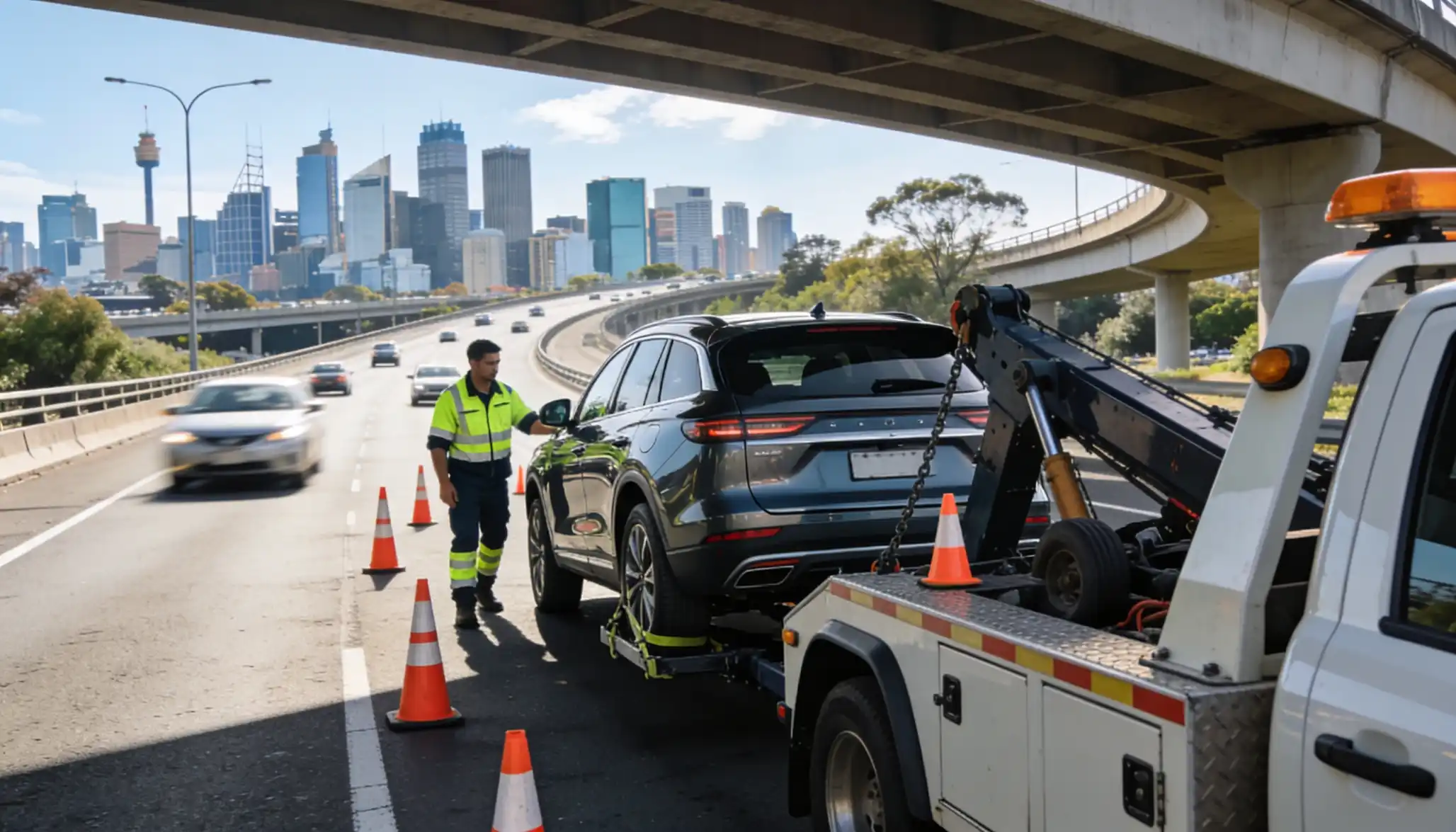
How Professional Towing Companies Do It Differently
Professional roadside assistance exists for a reason. Towing companies train their technicians to safely manage complicated recovery scenarios, using the right equipment for the job every time.
Flatbed Towing Technology
Most tow companies now use flatbeds for the majority of vehicles. Instead of dragging your car behind a truck, the entire vehicle is winched onto the tray, keeping all four wheels off the ground so your transmission, drivetrain, and suspension see zero wear on the journey.
Proper Hookup Points
Experts know exactly where to place winches and chains for your vehicle's make and model. They use the factory-designated tie-down points instead of guessing and grabbing on to vulnerable steering parts.
Full Commercial Liability Insurance
A certified towing service guarantees your car is covered by insurance from the moment it's hooked up until it's returned to you. If anything goes wrong on the journey, the company's commercial insurance covers the loss, not you.
The Smarter Roadside Choice
Next time you're stranded on the side of the road, skip the awkward call to a friend. Keep the relationship intact and leave the heavy lifting to people who make it their job. Calling a local, professional car towing service gets you, your car, and your friendships home safe.
If a blown tyre is what stranded you in the first place, our guide on changing a tyre on the highway explains why that's another job best left to professionals. And if the breakdown itself came down to a DIY towing attempt, our breakdown on towing a car with a car in Melbourne covers the fines and damage that can follow.
It also pays to double-check your car's braking before any tow. Our handbrake towing damage guide shows what can go wrong even when a professional is behind the wheel, let alone a well-meaning friend.
If you're weighing up the cost either way, our breakdown of DIY vehicle recovery walks through why the "free" option is rarely the cheaper one once repairs are on the table.
Reliable Roadside Assistance Near You
If you need to be towed quickly and safely without risking damage to your car, don't attempt to tow it yourself. We run modern flatbeds and wheel-lift trucks built for safe handling of every vehicle type, with emergency towing available across the region whenever you need it.
While you're stuck, or if you'd rather keep our number on hand for next time, reach out to our dispatch team today.
FAQ
Answers to common questions about tow trucks, trailers, and roadside recovery in Melbourne.
How do tow trucks pull cars out of tight parking garages?
They use low-profile wheel-lift trucks built for clearance, since standard tow trucks are too tall to enter indoor garages. Always report the garage clearance height to the dispatcher.
Can a standard tow truck haul a boat or a camper trailer?
Yes, many tow trucks feature hitch receivers on the rear, which lets them hook up to standard trailers. However, if the trailer itself is damaged, it goes on a flatbed instead.
What happens if my car breaks down in a flooded area?
Never try to start your vehicle near a flood zone or if it's submerged in water. Wait for help on high ground and stay away from the car. Specialised heavy-duty winches pull the vehicle out safely, since standard tow trucks can't drive through deep standing water.
Conclusion
A tow strap and a favour from a mate might feel like the easy option at 11:30pm, but the physics, the legal risk, and the friendship on the line make it a gamble that rarely pays off. Proper equipment, trained operators, and commercial insurance exist for exactly this moment.
Car Towing Melbourne is ready around the clock with flatbeds and wheel-lift trucks, so the next breakdown costs you a phone call, not a car, a windshield, or a friendship.