You're driving along the motorway with the music up, going fast, when you suddenly hear a loud thump through the steering wheel. It yanks to the left, and the unmistakable rhythmic sound of a tyre ripping apart follows. Your heart sinks. You manage to get onto the shoulder, but the traffic beside it is still flying past at 120km/h.
You could pop the boot, pull out the flat, and swap it for your space-saver spare. You know how to change a tyre, right? It looks like a minor nuisance. But working at the side of the road with live highway traffic beside you is one of the most dangerous situations a driver can be in. Here's why you shouldn't try to change your own tyre on a high-traffic road. A worn tyre is also far more likely to fail in the first place, so a winter car prep checklist is worth running through before the cold months set in.
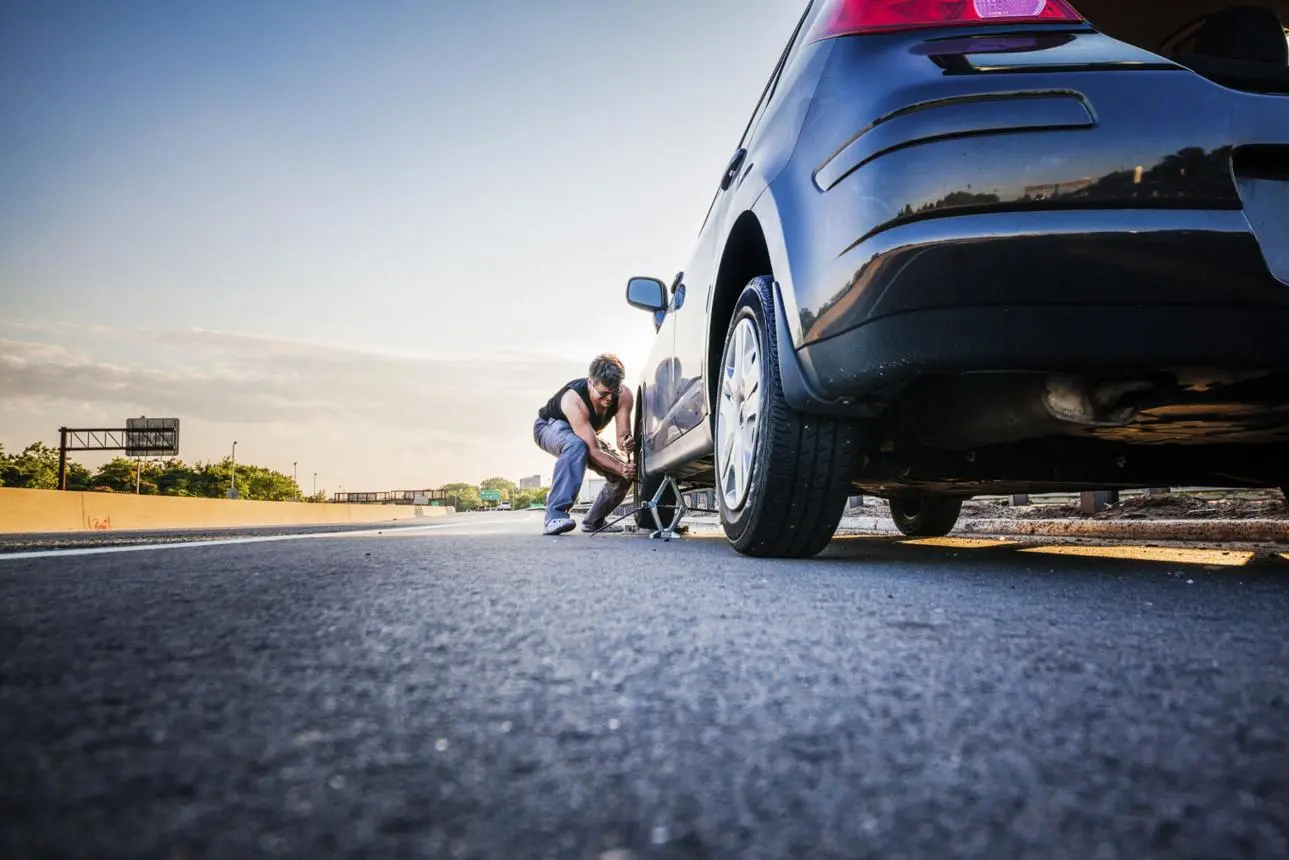
Oncoming Traffic Is the Biggest Risk
The breakdown shoulder feels like a safe place, but it's actually very unstable. Cars travelling at triple-digit speeds generate huge air drag, and when a semi-trailer passes through, the turbulence can easily knock a car off a flimsy emergency jack.
Distracted driving is also at an all-time high. It takes a driver only three seconds to glance at a text message, and in that time a car can drift onto the shoulder. If you're crouched down by the wheel well, you're almost invisible to fast-moving traffic. If a vehicle swerves towards you, you have zero reaction time.
Unstable Ground and Structural Failure
The jacks issued with most vehicles are light, mechanical tools built for flat, level, concrete surfaces like an empty car park or a garage floor. Highways are rarely that forgiving.
- The slope factor: motorway shoulders are angled so rainwater drains away. Jacking a car on an incline shifts its centre of gravity, which is exactly why it can slip off the jack.
- Soft ground: a car jack can crush gravel, dirt, or hot asphalt, and the car can suddenly drop.
- Close to traffic: when the flat tyre is on the driver's side, your back is fully exposed to the active traffic lane while you work.
If the car slips off the jack while your hands or feet are near the wheel arch, the weight of the vehicle can crush you. On paper, changing a tyre is a four-step process. On a highway shoulder, it's an exhausting, high-stakes ordeal.
Expert Tip
Repair shops use pneumatic impact wrenches to loosen lug nuts in seconds. Doing it manually with a small tyre iron is a serious effort, and rusted, frozen nuts are common. Rounding a nut or bending your wrench leaves you stuck roadside with nothing to show for it.
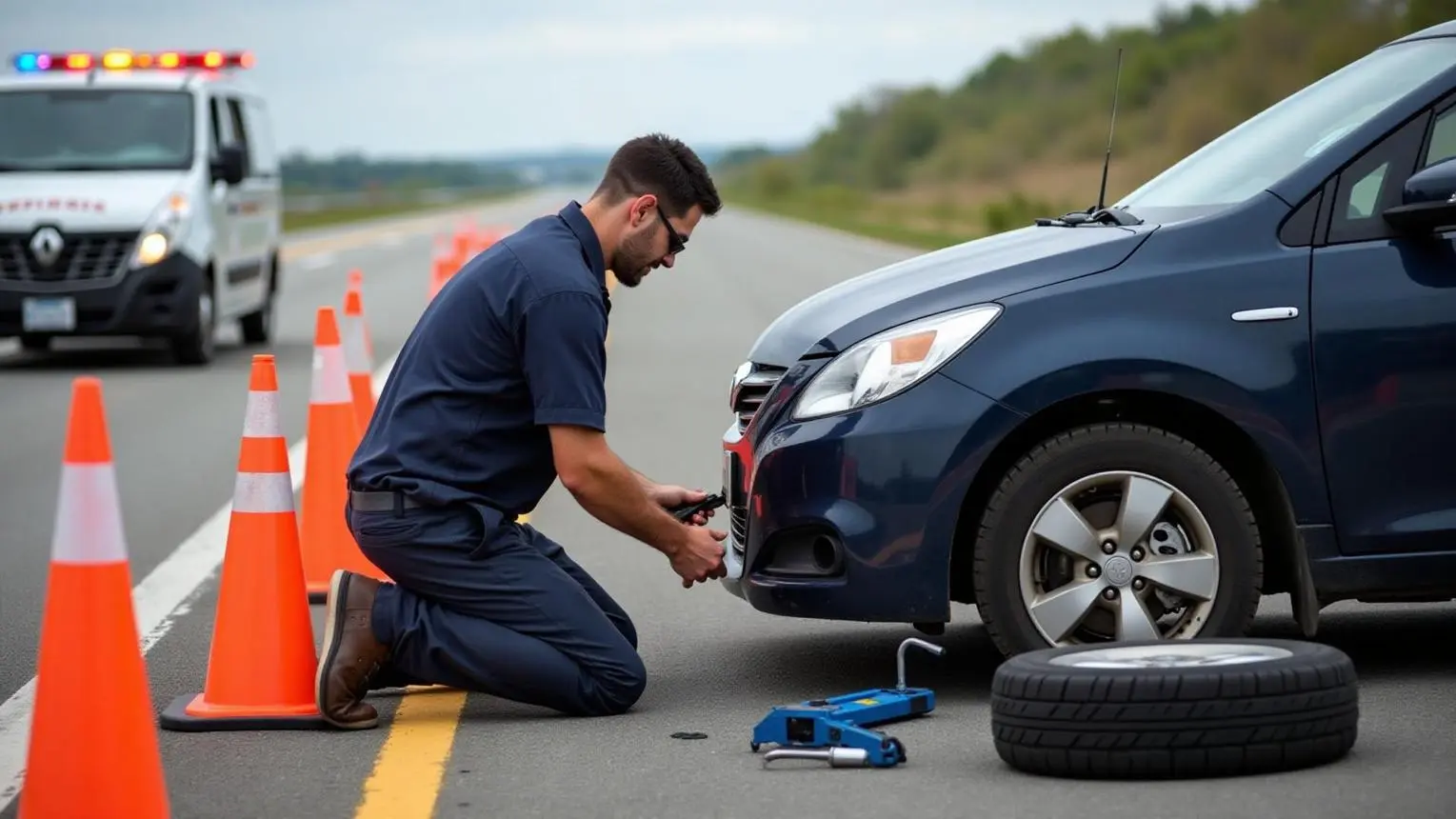
Why Professional Roadside Recovery Is Safer
Choosing not to change your own tyre on the highway is a well-informed decision for your safety and your vehicle. Trained technicians who specialise in highway tyre changes can do the job with far less risk. Their recovery vehicles carry industrial-grade amber LED light bars, reflective arrow boards, and high-visibility signage. If the puncture happens mid-span, read our West Gate Bridge breakdown safety guide before you open a door.
A professional vehicle parked behind your disabled car creates a physical barrier that alerts oncoming traffic hundreds of metres away, giving drivers time to change lanes. Pros don't rely on flimsy scissor jacks either; they use heavy-duty hydraulic floor jacks and stable blocks that position your vehicle securely even on an uneven or sloped shoulder, along with pneumatic or high-torque cordless impact drivers for stubborn lug nuts.
A trained technician replaces a tyre in a fraction of the time it takes the average driver, which means less time spent in the danger zone and a faster return to safe, moving traffic. If the breakdown happens somewhere you can't reach safely at all, our emergency towing service can recover the vehicle without anyone stepping into the traffic lane.
Steps to Take While Stranded
Don't slam the brakes. Take your foot off the gas and keep control of the steering wheel until help arrives.
Move to safety. Signal and slowly guide the car as far left onto the shoulder as possible; driving on a while longer to reach an exit is safer than stopping in a blind spot.
Activate hazards. Turn on your flashers right away, and if it's safe, exit from the passenger side, away from traffic, and stay well back on a grassy embankment or behind a barrier.
Call the experts. Contact a local emergency towing service and let a roadside recovery team respond to your exact location.
A flat tyre is a minor nuisance, but changing it yourself on a busy motorway can end up costing far more than the tyre.
Roadside danger doesn't stop at flat tyres. Read our guide to what to do when your car breaks down in Melbourne for a full breakdown checklist, or see our roadside assistance guide for Melbourne Metro for quick fixes to other common car problems. And if you'd rather not lean on a friend with a tow rope after a breakdown, a professional tow is always the safer call.
FAQ
Answers to common questions about flat tyres, highway safety, and roadside assistance in Melbourne.
Will roadside assistance change a tyre if I don't have a spare?
No, they can't change it without a replacement tyre. A driver can use an inflation kit for a small puncture, but if the tyre is fully deflated or blown, the car will need to be towed.
Can I drive on a flat tyre just to get to a safe spot?
Yes, but only for very short distances at slow speeds. Driving on a flat tyre destroys the wheel rim quickly and can also tear your brake lines. Move just far enough to reach safety and wait for professional help.
What should I do if my tyre blows out at high speed?
Grip the steering wheel firmly and keep the car going straight. Do not slam the brakes; let the car slow down on its own. Ease off the accelerator gently to maintain control through the drag and guide the vehicle slowly to safety.
Conclusion
Save yourself the stress, the physical strain, and the very real danger of working beside live traffic. Our dedicated roadside recovery fleet is available 24/7 to make sure your tyre swap is handled safely, professionally, and at a fair price.
Keep our number in the car, and call our dispatch team right away if you're already stuck on the road.