What to do if you find yourself stranded on the Monash/West Gate? When a vehicle suddenly breaks down on one of Melbourne's major transport corridors, it is a very stressful and heart racing event. From a normal drive near Chadstone on the Monash Freeway to a puncture while driving across the West Gate Bridge, the shift from normal to emergency can occur in seconds. Panic can easily overwhelm your senses as hundreds of cars and heavy semi-trailers go past at 100 km per hour.
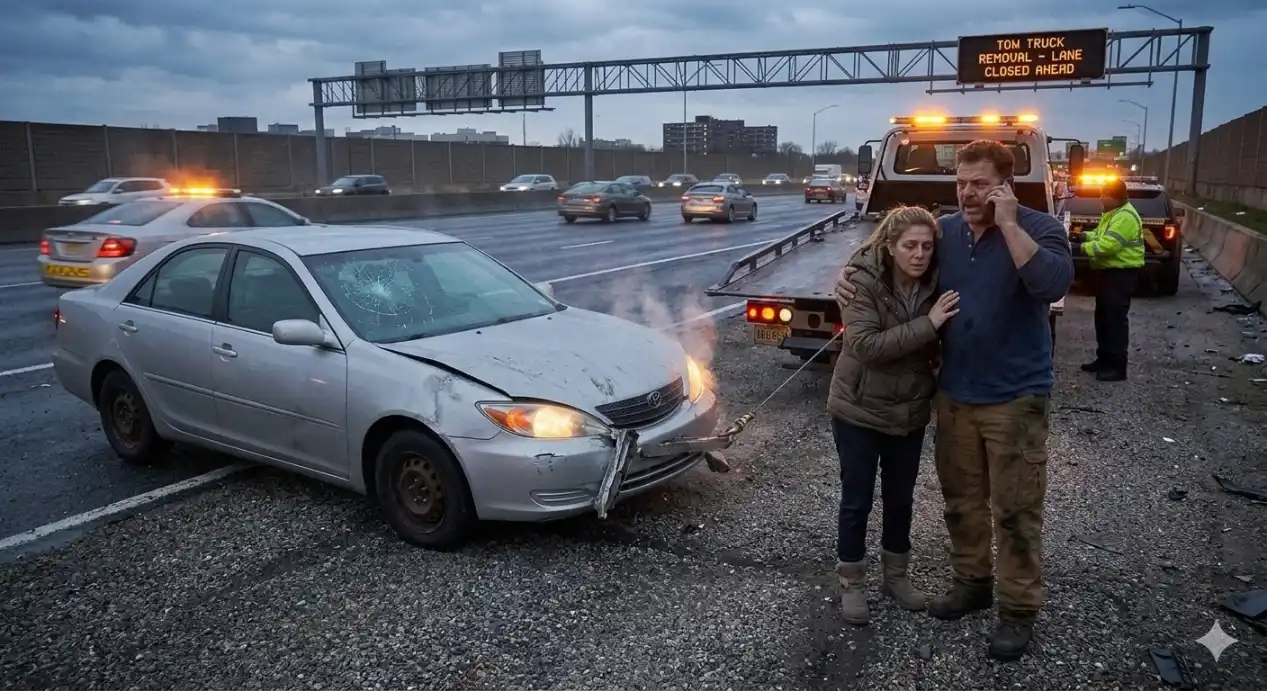
The Immediate Safety Protocol: What to Do in the First 60 Seconds
It's easy to make the mistake many people make when a vehicle breaks down on the highway, which is a quiet suburban stall. They pull over from the vehicle to look at a tire, or they sit in the car, right on the skinny shoulder lane.
These acts are extremely and life threatening. High speed freeways do not have a margin for error. Knowing exactly how to perform a 'safe procedure' immediately, knowing exactly where your car is and how to rapidly dispatch an emergency is your only chance of getting out of trouble when your car loses its power on a key Melbourne arterial road. Your safety is determined by what you do the first 60 seconds after your car starts sputtering or starts to slow down. When you have had a major mechanical failure: Do the following steps immediately to reduce the chances of an active traffic collision:
- Signal and move left immediately: Actively steer your vehicle towards the left-hand emergency shoulder or designated breakdown bay. Never stop on the right or in a traffic lane unless the vehicle is stopped.
- Turn on your flashers: Flash your lights right away if you are travelling at a low speed or stopping a high speed vehicle headed towards you.
- Measure the shoulder width: Carefully observe the emergency lane. Do NOT get out of the vehicle if the shoulder is very narrow or if part of the car is in an active lane.
- Stay inside or exit to safety: If the shoulder is wide, and there is a physical concrete safety barrier, carefully move through the passenger side doors (away from traffic) and stand behind the barrier. If no barrier or lane is narrow, do not attempt to cross the street, only accept help when it is offered, and maintain a tight fit of the seatbelt in the vehicle.
If you dial 911 to call for an emergency tow, you're vulnerable to a secondary rear end collision for every minute you spend stuck on the shoulder. This is exactly why changing a tyre on the highway is a risk experienced operators avoid altogether.
If a flat tyre is what forced you onto the shoulder in the first place, our dedicated guide covers the safest way to stay put and get help fast.
How To Help The Rescue Team Locate You
For the fastest emergency recovery vehicle to reach your location, you need to give the dispatch team an “exact” location.
- Use Live Smartphone Coordinates: Don't make an educated guess on which suburb you are travelling through. Open your phone's mapping app (Google Maps or Apple Maps) and press down on your blue GPS symbol and tell the dispatch operator the exact GPS coordinates or the closest cross-street intersection.
- Highway Kilometer Markers and Signage: Melbourne's major freeways have small green and white location markers that are located along the median strip or left shoulder every 100 to 200 meters. Look out your window to find the code that is closest to you (e.g., M1 - KM 24.5). Pass this code straight on to your tow company so they can clearly see which direction and lane to take. Be able to name big overhead gantry signs, up-coming exit signs (e.g., Warrigal Road, Williamstown Road) or unique infrastructure (e.g., structural towers of the West Gate Bridge) that you pass.
This structure will enable dispatchers to avoid traffic jams and get to you more quickly. If the ignition won't respond at all, our car won't start roadside checklist can help you diagnose it before the tow truck arrives. Our guide to being stranded on the Monash Freeway covers the same landmark-reporting habit in more detail.
Why 24/7 Emergency Dispatch is Your Fastest Escape Route
In the event of a highway breakdown, the only way to get out of the way is with a 24/7 emergency towing in Melbourne dispatch service that can arrive in just a few minutes. A team of 24/7 emergency dispatchers with quick response flatbeds and heavy duty recovery equipment is needed.
Emergency operators are professional and have up-to-date links with the road management organisations, such as VicRoads. In the event of an emergency call from a high-risk area such as the Monash or West Gate, the dispatch team may contact traffic management centres to activate digital overhead signs on the freeway to signal oncoming motorists to move towards the centre of the roadway. Those same signs also enforce peak hour clearway restrictions.
In addition, emergency recovery drivers are very skilled in scene management under extreme speed. They come in with high-visibility amber strobe lighting arrays, set up their large trucks to provide a physical buffer shield between your car and traffic, and safely and quickly winch your car onto their flatbed tow truck tray, so you get out of the danger zone unharmed. It is important to put human life first when a vehicle is sitting on a freeway shoulder; it can be fixed or replaced by insurance, but a human life can't. In the event you are caught on the Monash Freeway, or West Gate Freeway, keep cool, stay out of the roadway and act as you would in any real emergency.
Knowing what a recovery costs before the call helps too, so review our emergency towing prices and keep the figure in mind.
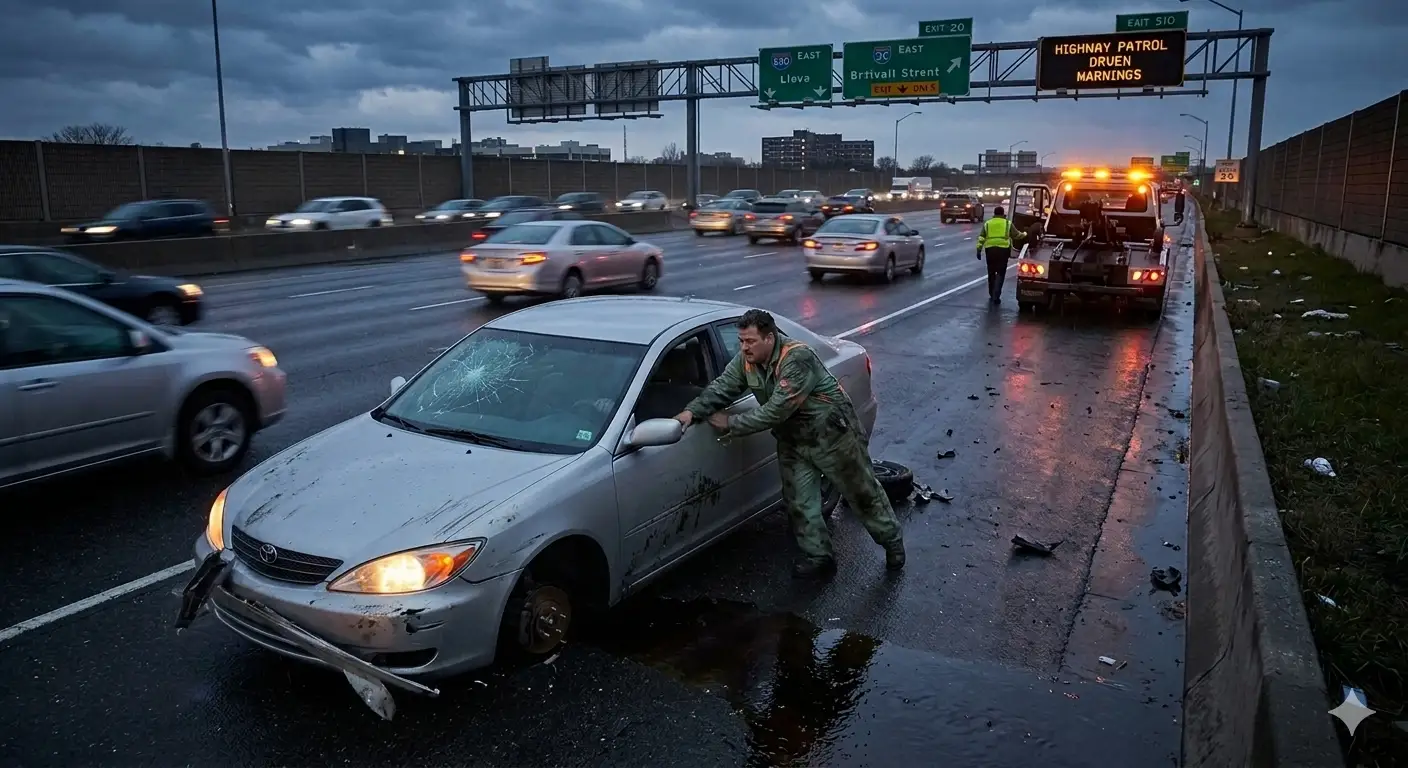
The Electronic Safety Net: How Managed Freeways and Live Traffic Management Coordinate Your Rescue
Use the latest smartphone technology to pinpoint your location, keep your passengers safe and secure, and contact a professional emergency towing dispatch team ASAP to remove your rig from the highway shoulder and back to safe ground. Freeways such as the Monash (M1) and West Gate in modern Melbourne are no longer just a piece of asphalt, but are very sophisticated and intelligent Managed Freeways.
Once your vehicle has a breakdown, a sophisticated digital network immediately springs into action to determine your vehicle's location before your actual tow truck arrives. Knowing what this electronic safety net does, can give great peace of mind whilst waiting on a dangerous highway shoulder.
A camera network known as closed circuit television (CCTV) is used, and these cameras are monitored by traffic control centers 24/7, across the entire length of Melbourne's major freeways.
- Automated incident alerts: Intelligent software automatically alerts to a vehicle slowing down excessively or stopping on a shoulder lane.
- Instant camera lock-on: The control room operators quickly lock on to a particular camera feed to determine your vehicle's safety risk.
- Overhead Lane Signals (LUS): Operators in the control room are able to change the digital speed limit signs and lane use signals directly above the highway.
- Lane closure triggers: A live lane that is blocked by a car or parked on a blind curve will be signalled by a red "X" on the corresponding lane kilometres back to move traffic over.
An electronic system directly coordinates with on-road support assets in high-risk freeway areas, enabling a coordinated approach to incident response vehicles. VicRoads Incident Response Service (IRS) units are always on patrol on major roads to ensure scene safety.
These yellow and black trucks are usually first to arrive at a highly vulnerable position if you are stranded on the road without your private tow truck. They will be behind you with huge directional arrow boards flashing and effectively blocking the traffic. This coordination means that when your emergency flatbed tow truck arrives, the operator will be able to place you on the flatbed, in a secure controlled roadside pocket, eliminating high speeds of the roadside. Where a crash is involved rather than a breakdown, our accident towing Melbourne guide covers the insurance paperwork that follows.
For the everyday faults that strand drivers in the first place, our guide to roadside assistance in Melbourne metro explains the quick fixes worth trying before traffic builds. If you are stranded right now, you can contact our 24/7 dispatch team and give them your kilometre marker.
Frequently Asked Questions
Answers to common questions about breaking down on Melbourne's Monash and West Gate freeways.
What should I do if my car stops completely dead in the middle lane of a Melbourne freeway?
If your vehicle stalls completely in an active traffic lane and cannot move, DO NOT exit the vehicle. Stepping onto a freeway lane with active traffic is incredibly dangerous. Keep your seatbelt buckled tightly, immediately activate your hazard lights, turn on your interior cabin lights if it is dark, and immediately call 000 for emergency police assistance to block the lane and then contact an emergency towing dispatch service.
Can a standard roadside service van change my flat tire on a freeway shoulder?
While roadside patrol vans can technically change tires, many professional providers will refuse to do that on a high-speed freeway due to safety regulations. If the flat tire is on the right-hand side (the traffic side), attempting to change it places the mechanic at direct risk in the path of 100 km/h vehicles. In such cases, it is generally safer to use an emergency flatbed tow truck to lift the entire car and move it to a safe side street before conducting repairs.
Are there designated safe zones or breakdown bays on Melbourne's upgraded freeways?
Yes, managed freeway systems like the Monash have dedicated Emergency Stopping Bays equipped with yellow emergency phones and overhead monitoring cameras. If your vehicle is dying out but can still roll, always try to move the car into one of these recessed bays rather than stopping on the standard running highway.