Melbourne is a city that is renowned for its culture, its colourful laneways and its world-class coffee. For drivers, it's also a city that's characterized by a very particular and sometimes inhospitable road environment. Driving in Melbourne is like operating in a complex environment brimming with sophisticated infrastructure, such as the world's biggest tram system, as well as the meticulous and demanding laws and consequences of peak-hour clearways.
Vehicle Recovery is not only about hooking up a car and driving off. If something goes wrong on our roads, vehicle recovery isn't simply about hooking up a car and driving off. This includes dealing with strict local laws, the limited space in the inner city, and Victoria's highly regulated towing laws. Whether you're coming from afar and learning the 'hook turn' or a long-time ‘Melberian' seeking a better understanding of the city's infrastructure and towing systems, you'll save a lot of time, money and stress.
Inner-City Recovery: The Tram Track Trap
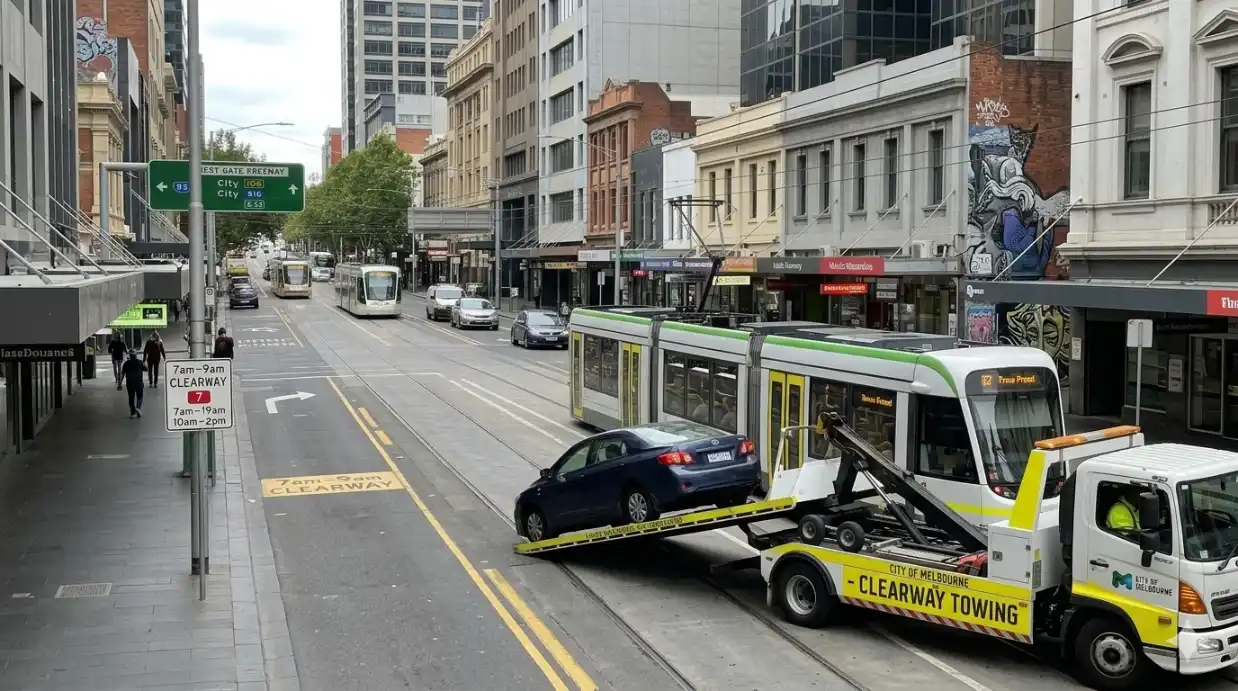
Melbourne's iconic green and yellow trams are the lifeline of public transport. But the common use of asphalt with multi-tonne rail vehicles brings a unique set of issues for local motorists.
Inconvenience is one thing on a regular suburban road, but not so when it happens on a Melbourne tram track, or a little collision. A vehicle can stall or have a puncture on tracks which are located in a busy traffic environment such as Swanston Street, Collins Street, Bourke Street, and so on, and can instantly stop a whole transit line. Hundreds of commuters are held up and the financial consequences of obstructing public transport may be serious.
The tow recovery of a vehicle that is in the middle of a tram rail should be considered a great challenge in the towing industry. The tracks can cause damage to tires and the slippery metal surfaces make it difficult for recovery vehicles to get traction. In addition, high voltage overhead clearway wires are in use, so the operator of a tilt-tray needs to be extremely careful with the management of the boom in order to avoid potentially catastrophic electrical hazards. Local towing businesses need to work seamlessly with Yarra Trams and VicRoads to ensure the road is cleared safely and quickly when a car stops on the tram line.
Clearway Countdown: Two Minutes Late is a Towed Car
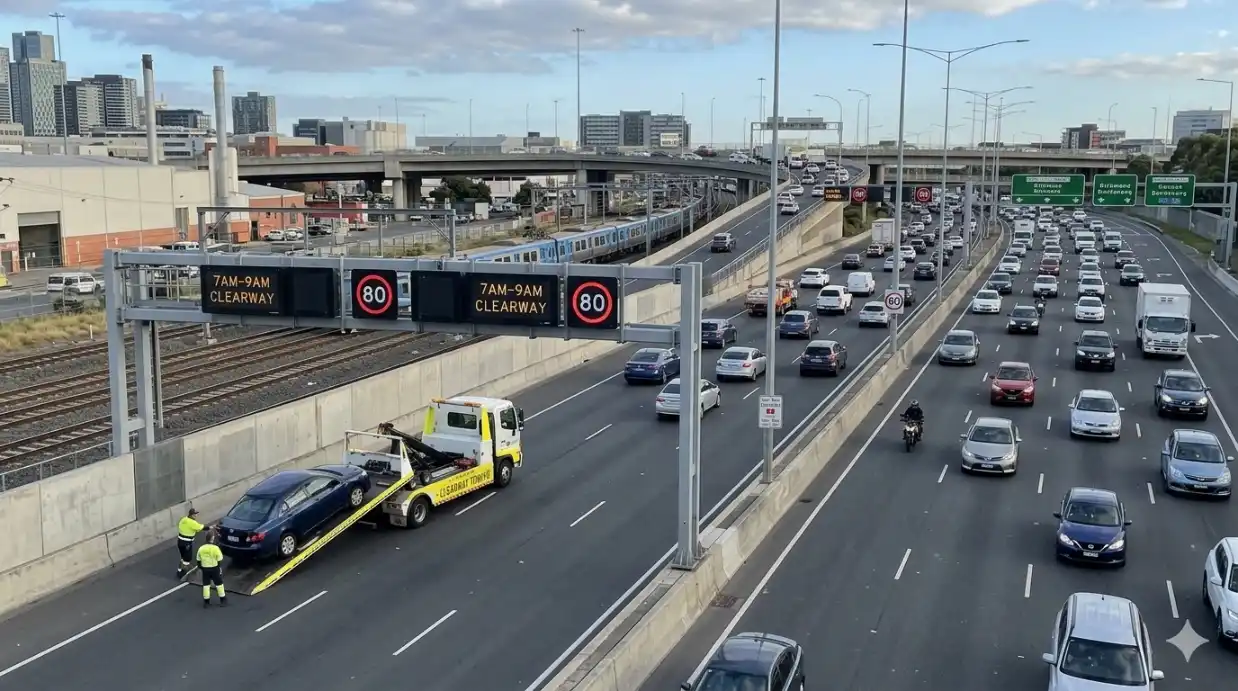
The dreaded clearway signs are a common occurrence to anyone who has tried to park along one of the main roads in Melbourne during peak hour; such as Punt Road, Chapel Street or the Maroondah Highway. The clearways are intended to convert parking lanes into traffic lanes for Melbourne's most hectic morning and evening hours.
These zones are very strictly enforced. Parking authorities don't give warnings, and don't wait for a grace period. On a clear day, when the time hits 4:00 PM, the tow trucks are on the move down the strip.
Being towed from a clearway is not only an incredibly frustrating experience but an expensive one as well. Your car is not being transported to a local repair shop – it's being driven to a named impound yard, with additional release fees in addition to traffic fines. Knowing the narrow operating hours of Melbourne's arterial roads is the best way to beat an unwanted visit to the vehicle re-claim yard.
Decoding Melbourne Accident Towing Allocation Scheme (ATAS)
One of the most distinctive things about Melbourne car driving is post-road accident tow. Post road accident tow is one of the most unique aspects of motoring in Melbourne. In other parts of Australia, anyone who gets into an accident can't help but call any local towing company, however, in Melbourne the region has a specific legal framework called Accident Towing Allocation Scheme (ATAS).
The ATAS was implemented to stop the ‘tow truck chasing' and to keep vulnerable drivers safe at crash scenes within the greater Melbourne area by only allowing an officially designated tow truck to attend a crash site. The way it's supposed to work:
If an accident does take place on a Melbourne road or freeway, the incident needs to be reported. The regulatory agency then runs a zoned allocation system where the next authorized tow truck in line is randomly passed to. Any company arriving on the site with a truck that is not authorized to be there and is pressuring you into a contract is operating illegally.
If you are a driver, it's important you understand your rights under this Victorian scheme. When the truck comes the time to tow your car, you can choose where your car will go, whether that's your preferred smash repairer, your home, or a holding yard. Understanding the guidelines of ATAS is actually a vital thing for you to do so you do not fall for the tricks of predatory operators, a time of anxiety.
Hook Turns and Tight Spaces: The CBD Geography Challenge.
Of course, Melbourne's Hoddle Grid is renowned for its logical layout, but the unique right-hand turn to keep tram lanes open, called a hook turn, is a well-known feature of the area. Hook turns can cause low-speed car accidents if the driver is not familiar with the procedure.
Accidents and breakdowns that occur within the central business district (CBD) are influenced by the physical geography of the city and dictate recovery strategy. Melbourne is well-known for its narrow laneways made of bluestone. These alleys are ideal for hidden bars and street art, but are a nightmare in terms of logistics for the big recovery vehicles.
Heavy duty tow trucks just can't be used in most of Melbourne's narrower roadways or in multi-story inner city parking garages, which have low clearances. Specialist fleet capabilities are needed: low clearance rapid recovery vehicles and compact tilt-trays designed to fit in confined areas without causing any secondary damage to neighbouring heritage brickwork or infrastructure.
The Sustainable Transport Challenge: The Next Generation of the Cyclecade Connection
The city of Melbourne is making many strides toward a green future and the number of electric vehicles (EVs) on our roads has been exploding. From Teslas to BYDs, EVs are a common sight from St Kilda to the Yarra Valley. But towing an EV is no easy task compared with the traditional internal combustion engine vehicle.
Most electric cars do not allow flat towing. EVs typically do not have a neutral that fully unloads the electric motors from the wheels, so towing a stranded EV with the wheels on the ground could create friction and electrical energy that can heat the battery pack up to destructive temperatures and damage the powertrain.
This change has necessitated a significant amount of training for Melbourne towing companies' technicians and an increased number of flatbed tilt-trays or specialized wheel dollies to be used. It is essential that your towing company has the correct zero wheel contact equipment to ensure the warranty and mechanical condition of your EV are maintained if it runs out of charge or malfunctions near the West Gate Bridge.
Maintain a Road-Smart attitude in Melbourne
The city of Melbourne is a wonderful place to drive, with scenic stretches of the coast along the highway and the hustle and bustle of city driving. But a combination of old tramways, hard set clearway zones and specific accident allocation legislation makes it important for drivers to be aware of the situation. You can overcome any curveball Melbourne can throw at you by respecting the clearway clocks, understanding what rights you have after an accident and knowing what to do when you get into a tight urban environment.
Frequently Asked Questions
Answers to common questions about Melbourne clearway towing and the Accident Towing Allocation Scheme.
Should you break down on a freeway in Melbourne can you select your own tow company?
Yes. The Accident Towing Allocation Scheme (ATAS) will not apply to vehicles that have a mechanical fault (e.g. dead battery, flat tyre or engine failure). You can contact any towing company of your choice to help you and move your car to the place you want. The allocation system is limited to situations where a vehicle is damaged in a motor vehicle crash and is not safe to drive away.
If my car has been towed from a Melbourne clearway zone, what should I do?
When returning to the clearway and suspecting your vehicle has been towed, you should call the VicRoads Towing Line or the local municipal council immediately. They will confirm whether or not the car was impounded, and tell you which holding yard it was placed in. In order for the vehicle to be released to you, you will need to present proof of ownership, pay the statutory fee imposed for towing the vehicle and any fine imposed by the council, and then the vehicle will be released to you.
So why have some Melbourne Tow Trucks got coloured numberplates?
Tow trucks in Victoria have different number plates in accordance with a regulated system for the official allocation of tow trucks, some of which may have "T" prefix letters or special designators depending on the type of tow truck. The plates communicate to VicRoads, Victoria Police and the general public that the vehicle is commercially licensed, insured and meets state towing regulations and is not a commercial transport vehicle.