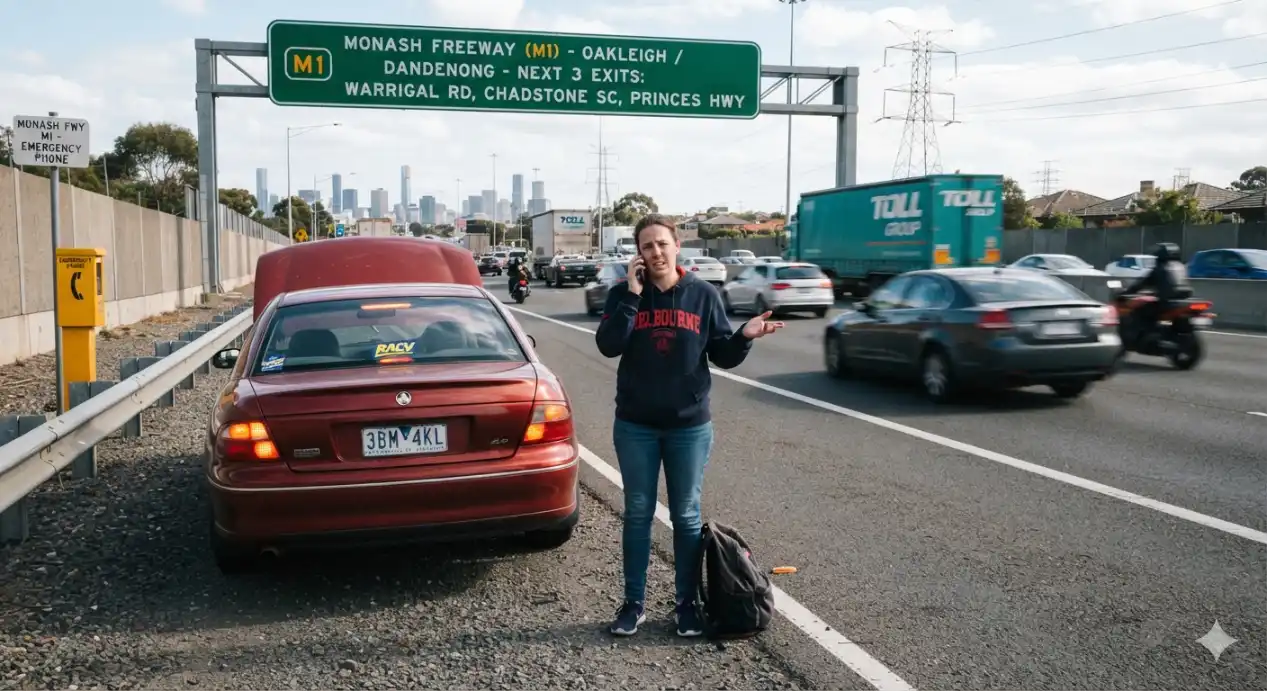
As a driver, nothing is more stressful than a freeway breakdown in the middle of rush hour in a major metro area. Whether you're on an EastLink multiple lane highway or the Monash Freeway, a moment's mechanical failure can make for a very dangerous situation. Heavy traffic of commercial semi trailers and thousands of commuters are whizzing by you at one hundred kilometres per hour, so you have little margin for error.
The faster and the more precise your response is to a breakdown on the highway, the safer you and your passengers will be. By understanding how our roads work, visiting these major arterials and tollways in Melbourne, you will be better equipped to navigate them safely, with an awareness of the distinct nature of each section of road, and what you should expect in the area.
How To Handle Emergencies: A Step-by-Step Guide
A well planned emergency will help you deal with the crisis successfully, protect your vehicle, and help you reach a fast and safe solution. For the wider corridor, our guide to a highway breakdown on the Monash or West Gate sets out the first 60 seconds step by step.
Step 1
First, get out of live traffic as quickly as possible; this is your highest priority when things go wrong with your vehicle. Don't wait until your engine sputters, a tyre blows out or the warning light comes on your dashboard before you pull the vehicle over. Turn on your flashing lights and start signalling to the following driver(s) that you are in an emergency and need to move towards the left.
On sections of the Monash Freeway or Eastlink with a dedicated left hand emergency shoulder, over the solid white line, and park as far left on the road as possible. Look for the nearest marked emergency breakdown bay if you are on a managed motorway; a road equipped with a shoulder that is used as a live driving lane in times of congestion. If the engine simply won't start rather than failing mid-drive, our car won't start checklist covers the likely causes before you call for help. Wondering what happens once you do? See what to expect during an emergency towing call. These bays are well protected from traffic and have the greatest degree of structure protection until the local flatbed recovery unit arrives.
Step 2
Once you have stopped on the shoulder or in a breakdown bay, turn on ALL visual warnings and remain in the vehicle. Turn on flashing hazard lights. To ensure your vehicle is properly visible from a distance, particularly in the event of a breakdown during a heavy Melbourne winter downpour, late at night or on poorly lit portions of the freeway, turn your car's parking lights on. In the event that your vehicle is not on fire or in an extremely unsafe live lane, it is safest for you and your passengers to be inside and wearing their seatbelts.
Your vehicle's steel frame protects you from secondary collisions. When you're on a high-speed freeway shoulder, you're right in the midst of traffic and heavy trucks that can kick up unpredictable winds. Do not open windows, do not panic, and tell everyone in the vehicle to stay in the vehicle as you start making arrangements for help.
Step 3
An advantage of stopping on a major modern tollway such as Eastlink or a managed toll area on Monash is the extensive network of intelligent transport systems that are monitoring the road corridor. Dedicated control centres run the twenty-four hour closed-circuit television camera and automatic incident detection systems on these freeways. In the event that your car stalls, the control room operators will quickly see your stalled vehicle on EastLink. They can quickly flash the overhead digital speed signs, and reduce the posted speed limit for oncoming traffic and activate a red 'X' that closes the lane immediately next to your car. Tollway operators will immediately respond to an incident by sending their own incident response vehicles to place a physical buffer zone between you and them by flashing arrow boards.
Step 4
If direct contact is necessary, please find the nearest roadside emergency help phone or contact the appropriate tollway authority using your mobile device. There are rare situations in which it is no longer feasible to exit the vehicle: a smoking engine compartment or an electrical fire or if the vehicle is completely flat against a structural concrete barrier with no lane clearance. When exiting the vehicle, this movement must be carried out with great care and carefulness.
When leaving the vehicle: Always use the doors on the left side of the car (passenger side), and get completely clear of the live lanes of passing traffic. Do not open the driver side door into a high speed freeway lane. After exiting the car, never stand directly in front of or behind the car as a second rear end crash may cause you to get squashed between cars. Rather, find a safe place outside of the road corridor. Go up the grass embankment or behind the heavy steel W-beam guardrails or concrete jersey barriers.
Always pay attention to traffic and make sure that any children or pets are secure.
A sudden flat tyre is one of the most common reasons drivers end up stranded on the Monash shoulder, so it's worth knowing the extra steps that situation calls for.
Step 5
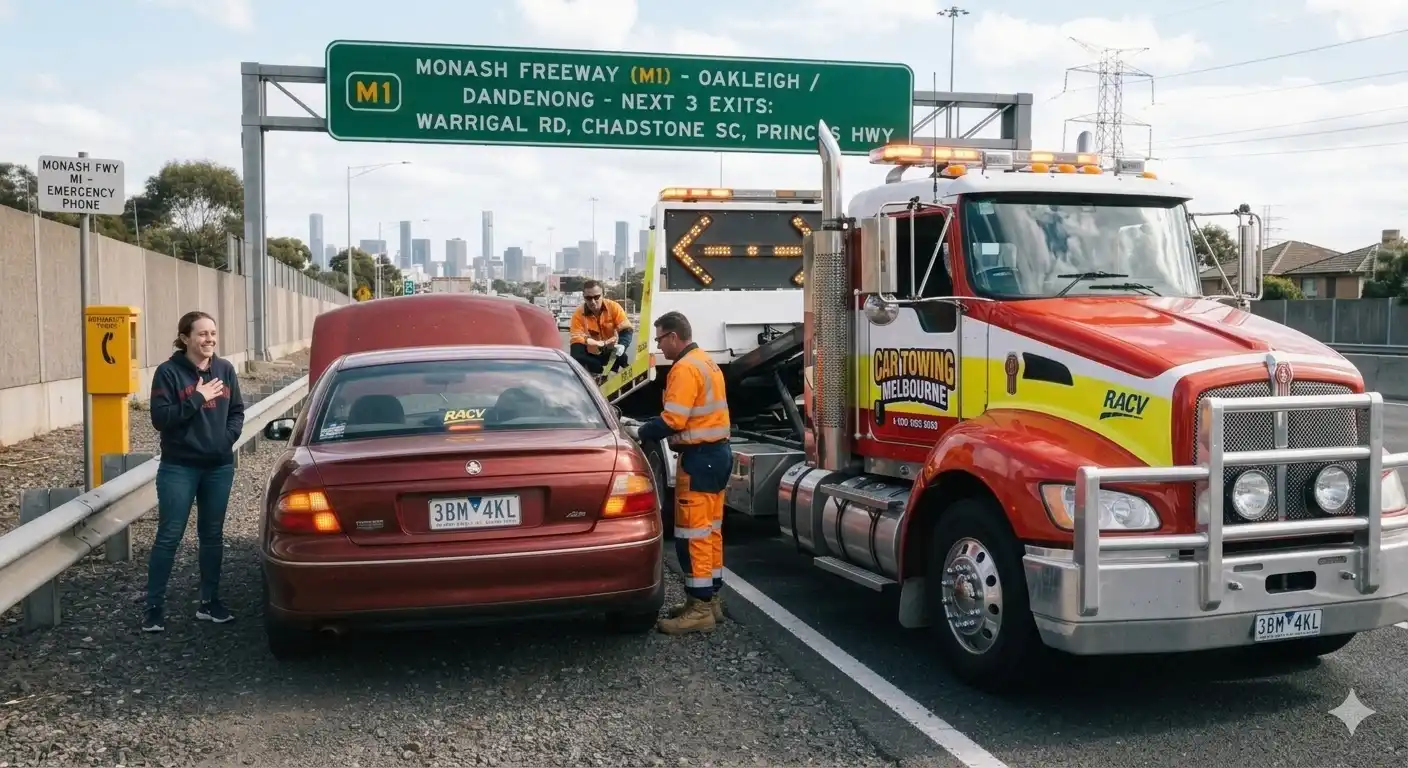
Arrange to get the vehicle taken off the freeway by a professional tow company. Each of these major motorway authorities has their own rules on how long an abandoned disabled vehicle can be left on a high speed motorway shoulder, as abandoned vehicles can cause a major distraction and constant collision hazard for other motorists. When you call a local Melbourne towing company, you will need to get them your true geographical position.
Record the name of the nearest freeway exit, or identify kilometer marker posts on the side of the road, or place a digital pin on the mapping apps on your smart phone. By indicating either North or South, the recovery driver will be able to avoid making long detours to interchanges to approach the incident location. Curious what happens on the other end of that call? Take a look behind the scenes of a 24-hour towing dispatch room.
If you are an all-wheel-drive car or have a low body kit your vehicle can be loaded onto a special tilt-tray flatbed truck which will ensure that your car is loaded safely without causing additional strain to any mechanical components and will not be added to the motorway network for loading. If the vehicle has rolled onto the grass verge or embankment and lost traction, our emergency tow truck Melbourne guide covers safe soft-ground recovery.
Frequently Asked Questions
Answers to common questions about breaking down safely on the Monash Freeway and EastLink.
In the event your vehicle starts to fail while driving on the Monash Freeway, what should you do right away?
Turn on the emergency flashing lights and safely signal to the nearest emergency lane or left shoulder. If power loss occurs, but also rolling, attempt to exit to the nearest possible off-ramp, avoiding the high speed traffic lanes. If you cannot reach the shoulder and are stuck in a live lane, stay in the vehicle, be sure to use your safety belt, turn on your interior dome lights (full brightness) and refrain from attempting to get out of the vehicle.
What is better: To stay in my car or pull over to the side of the freeway following a breakdown?
It is safer to stay inside your car, with your hazard lights flashing, on a high-speed road; such as on the Monash Freeway. Emergency lanes are often too narrow and stepping out could put you at risk of being hit by cars driving at 100 km/h. Exit the vehicle only if it is absolutely safe to do so, when exiting the vehicle from the passenger side, away from the flow of live traffic, and at once move to the rear of a protective concrete or steel safety barrier if available.
If I'm broken down in a lane and blocking a Melbourne freeway, who should I call for assistance?
The VicRoads Incident Response Service (13 11 70) should be contacted if your car has become stuck in the roadway or if it is directly blocking traffic or is creating an immediate hazard. Their special clearance staff work around the clock on the Monash network, and promptly respond to assist and secure breakdown locations by way of smart managed motorway CCTV cameras. In case of emergency, if you are in a safe area in an emergency lane, call your roadside assistance service or a local professional tow truck service to get a vehicle recovery truck.