There are few things as demoralising and disconcerting to the driver as a rapid, rhythmic thump-thump-thump as tyres puncture at 100 km/h. Tyres blow out easily on a high speed Melbourne motorway, and quickly turn a minor mechanical problem into a roadside crisis.
Being trapped on the side of a busy road is very frightening whether on the Monash Freeway, Peninsula Link or the Princes Highway. By remaining unfazed and knowing exactly what to do, you can make the difference between a speedy and safe recovery and a highly dangerous situation. A detailed guide to protecting yourself, diagnosing your problem and obtaining professional roadside assistance quickly in any part of Greater Melbourne.
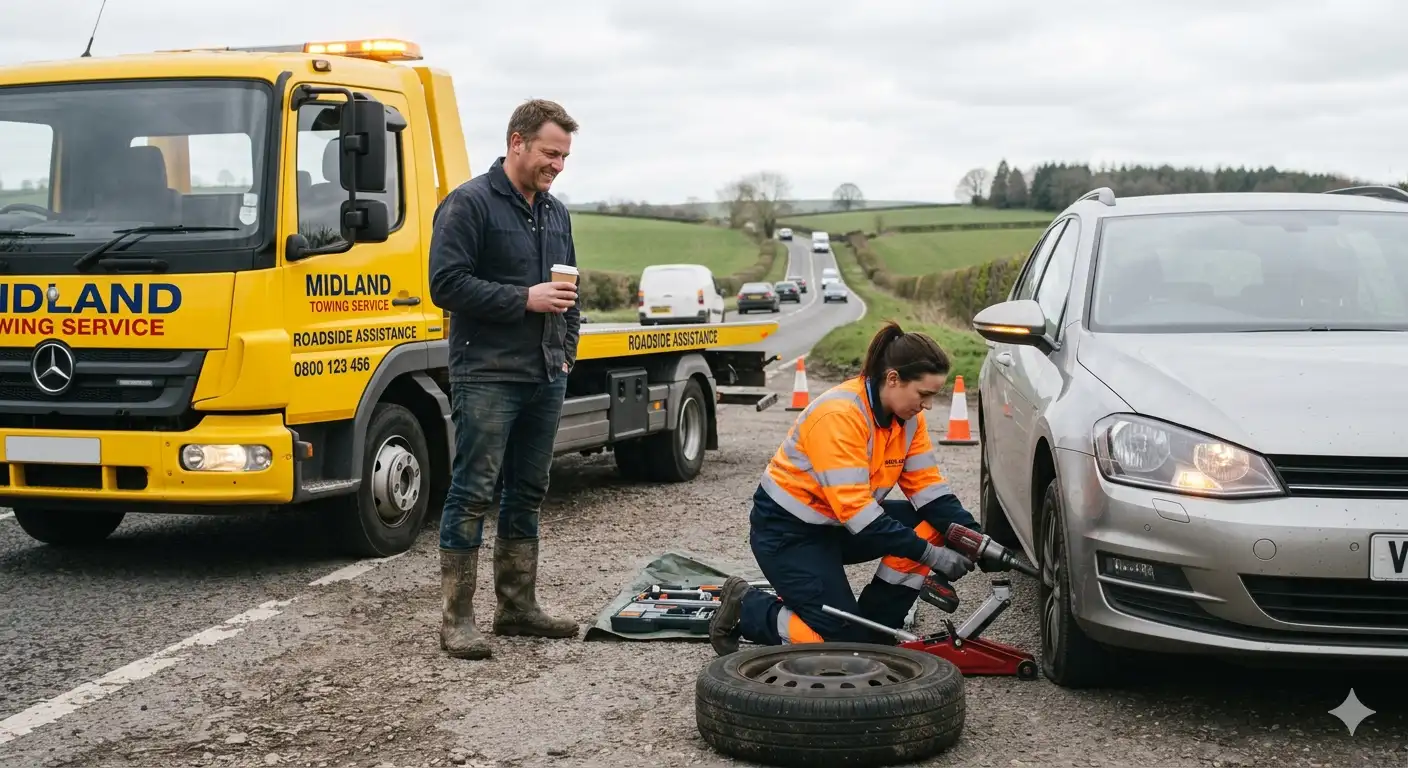
The Immediate Response: Surviving a Highway Blowout
The time after a tyre blowout can be critical. You should always make physical safety the top priority, and not the condition of the wheel or the destination's schedule.
- Do not brake suddenly: when a tire is completely deflated, the car will draw strongly towards the affected side. Slamming on the brakes can cause you to lose control or slide across lanes. Keep a firm grip on the steering wheel with both hands, keep steering straight ahead and slowly release the accelerator pedal.
- Signal and move to the left: guide your vehicle carefully and at an early stage to the left hand hard shoulder or emergency breakdown lane. On managed roads such as the M1 or M3, search for Emergency Stopping Lanes (ESLs) or breakdown bays where additional physical separation from active traffic is provided.
- Stop as far left as possible: park as close to the safety barrier or guardrail as safely possible. This will give you the greatest space between your vehicle and the traffic passing by. Rotate the front wheels all the way to the barrier, so if the car is hit from behind it will not be pushed directly back into the live lanes.
- Turn on your hazards right away: on dark routes, when the weather is raining or if visibility is poor on routes such as the Eastern Freeway, leave your parking lights on so that your vehicle would be very visible to oncoming drivers.
Conduct an Environmental Assessment: Stay or Exit?
After the car has stopped with a solid handbrake, assess if it's safe to exit. Highways in Melbourne are a very busy place and getting out of the car on the wrong side can prove to be fatal.
- Look at the damaged side: if your flat tyre is on the right hand side (driver's side), do not attempt changing your tyre on the highway by yourself on the shoulder. You'd be just inches away from the fast cars.
- Evaluate shoulder width: if the breakdown lane is very narrow or nonexistent, do not get out of the car. Stay in the car with your seatbelt on, sit as low as you can and do not leave the vehicle.
- The passenger side exit rule: if exiting the vehicle is necessary in order to assess the damage, exit through the passenger side doors, clear of active traffic lanes.
When Your Car Will Be Towed Without Your Permission
If your car flatters on certain roads in Melbourne you may find that the police towing service will take your car away before you can get your private roadside assistance service to respond.
- Active clearway zones: Victoria has established strict criteria to ensure that there is no major gridlock or secondary collisions. Vehicles left stranded on major arterial feeder roads such as Punt Road, Springvale Road or the corridor running down Hoddle Street during peak transit hours are hooked up and removed in real time.
- Blocking a tram clearance path: if you've had a flat tyre and are forced to stop anywhere close to a tram lane, Yarra Trams will immediately request an emergency priority tow to free up the public transport lane.
- High speed bends, crests or no hard shoulder: vehicles that have come to a stop during a highway breakdown on high speed bends, crests of bridges or where there is no hard shoulder are cleared of the road immediately by Police or Road crews.
- Tolled road sections: on private toll roads such as CityLink and EastLink, private toll plaza crews will quickly tow the vehicle to the nearest safe exit pocket, free of charge to help keep the road open.
Fast Roadside Assistance Options in Greater Melbourne
If you do not want to or cannot change the tyre yourself, Melbourne provides a variety of fast-tracked options to get professional assistance to your exact location. RACV, Victoria's biggest automotive club, is the first choice for normal metropolitan and regional tyre changes. If you have a spare wheel they will send a patrol car to fit it, or if you don't have a spare they'll provide a flatbed tow. Typical suburban response times are in the 45-60 minute range.
If you find yourself stuck on a publicly managed freeway in Melbourne, you can contact VicRoads via their Incident Line and they will use their Highways Patrol Vehicles to find you. The vehicles are fitted with high visibility, digital signage boards to protect your car from oncoming vehicles, while the technician guides you to secure your vehicle.
If you are not a member of a club and it is safe to do so, calling an independent mobile tyre fitter from a suburban arterial or residential boundary is likely to end up with a permanent solution the quickest. You can order a brand new tyre, and operators in suburbs such as Dandenong, Sunshine or Preston will deliver it to your door and fit it for you on the spot.
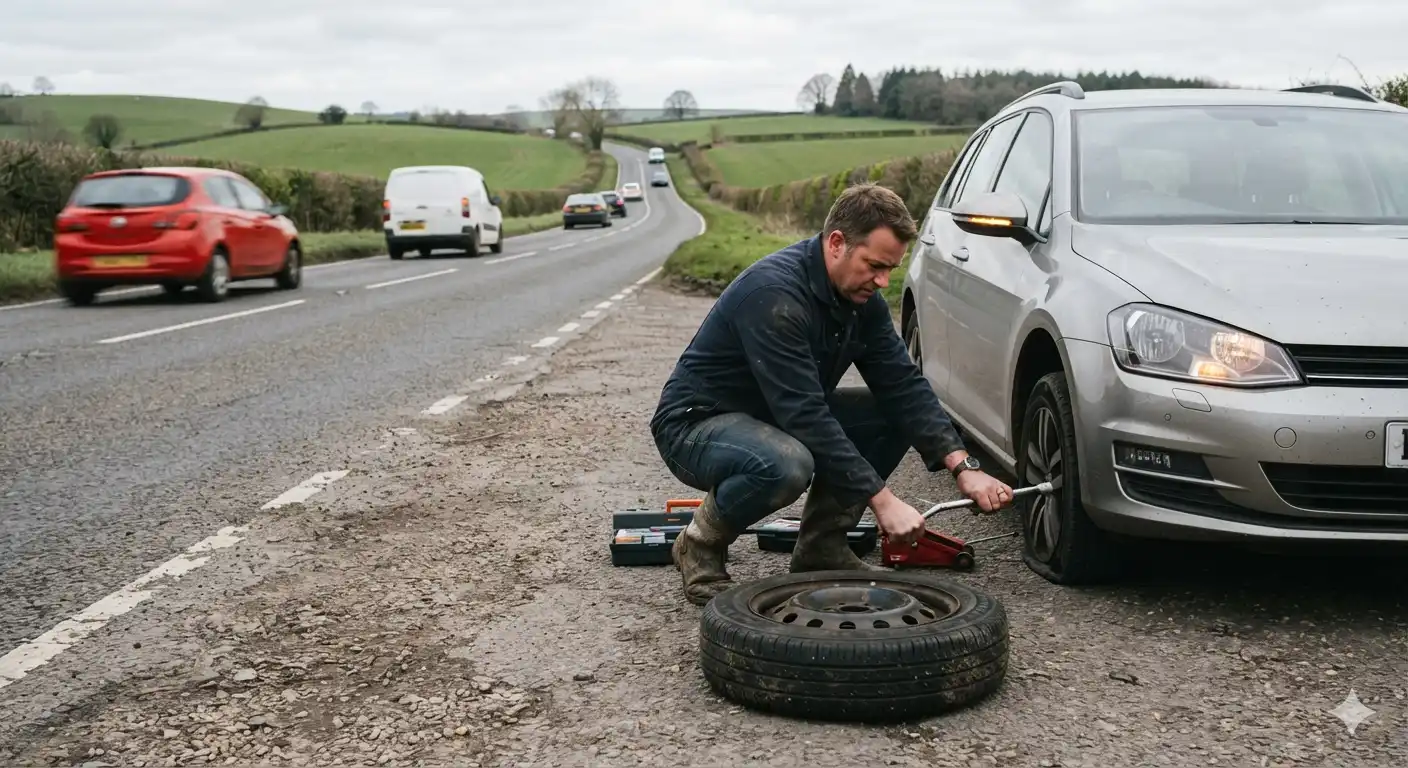
Signs You Have a Slow Puncture Before It Blows
Not every tyre failure results in a sudden dramatic event. Many blowouts on the highway are actually just slow punctures which weren't noticed on suburban roads, and then blew out when the vehicle hit high speeds on the freeway.
- The car starts to go sideways: the steering wheel is misaligned, or the car assumes a side-to-side position when the steering wheel is not being held on flat ground.
- A clicking or ticking noise: this sound is usually caused by a nail on the tyre and occurs repetitively at a uniform rate, increasing when you speed up.
- Poor steering response: steering is very difficult to operate, particularly at low speeds in urban areas around roundabouts or intersections.
- Tread wear: one tyre is visibly lower than the others, or tread shows unusual wear around the outside edge when compared to the opposite tyre.
- Tyre pressure monitoring light: a warning indicator in the shape of a yellow horseshoe will illuminate on your dashboard when there is a drop in tyre inflation prior to the tyre looking flat to the naked eye.
If your tyre fails at high speed on a highway, the damage may be so severe that it goes well beyond the rubber on the tread. Heavy damage could tear off the side of the tyre, bend the alloy wheel rim, damage the brake lines or bend the lower suspension arms. This type of hidden damage means it is essential to request the right kind of tow in order to avoid damaging the drivetrain of your vehicle while it is being towed.
The Critical Difference Between a Standard Tow and a Flatbed for Tyre Damage
It's always important to make sure that the towing company has a flatbed tow truck (also called a tilt-tray) and not a hook and chain or a wheel-lift truck. The flatbed truck will lift your entire vehicle up onto a flat surface with all four wheels firmly on the flatbed while staying off the ground with the help of a winch.
Cars with a broken axle, suspension or wheel damage that are towed with their wheels on the ground suffer a different amount of friction between the tyres and the road, which can cause damage to the transmission, the differential on all-wheel-drive vehicles, and cause extreme structural misalignment. Having a flatbed recovery means your car will not be damaged during the recovery process, which is a guarantee that any subsequent mechanical failure will not be your fault.
Finding Help With A Puncture In Melbourne
Stuck on the shoulder? Sometimes, a flat tyre is accompanied by a buckled alloy rim, a damaged wheel arch that is shredded or even structural suspension damage that will make even changing the wheel at the side of the road completely impossible. If you are in need of immediate and reliable towing and vehicle transport services to remove your vehicle from a motorway, Car Towing Melbourne is here to assist. Our services throughout the metro area are speedy, professional and damage-free. Our expert operators are well-versed in the special traffic and safety challenges of Melbourne's freeway network and will get you and your car to a safe location for repairs or your home address as quickly as possible, without the luxury club rate. Check our towing prices before you call, or contact our team any time, day or night.
Frequently Asked Questions
Answers to common questions about flat tyres and highway breakdowns in Melbourne.
Is it safe to run a flat tyre for a short period of time?
Only drive on a flat tire if you are moving away from an extremely hazardous live traffic lane to a safe shoulder or emergency lane. In a few hundred metres you will have to replace your tyre carcass, which is very expensive as well as replacing your costly alloy wheel and steering system will likely be ruined with damage that cannot be fixed.
If I suffer a puncture on CityLink or EastLink, what should I do?
24/7 CCTV control centres are used to monitor private toll roads heavily. When stopped on CityLink or EastLink, an incident response vehicle will usually be automatically dispatched to your location. With their truck they will physically block the lane of traffic, assess your health and then, off the tollway system to a safe place, without any cost to you.
Are all modern cars equipped with a spare tyre?
No. Many of today's cars sold in Australia don't have a full-sized or space saver spare tyre. Rather, manufacturers will typically offer a short-term inflator kit that includes a compressor and liquid sealant gel. They can only be used for small punctures in the tyre tread and won't repair a big blow out on the highway sidewalls.