When dealing with an emergency tow call in Melbourne, what you can expect from drivers: The complete driver's guide
When traffic jams leave you to break down on the side of a congested freeway in Melbourne, or find yourself in a sudden impact on the Monash, it's a very stressful situation. When things are hectic, the complete procedure you can go through can be the distinction between chaos and manageable.
Many drivers are unfamiliar with calling a tow truck. From the moment you dial the phone to the time you drop your vehicle off, this all-in-one guide reveals the truth of Melbourne's emergency towing services, ensuring your safety, knowledge and financial security.
The initial contact: What the Dispatcher needs to know is the first phase.
When you call a 24/7 emergency towing hotline in Melbourne, you will be put in contact with a knowledgeable dispatcher immediately. This initial discussion is very important; the sooner and the more accurate the information you provide the sooner a specialist tow truck can be directed to your location.
The dispatcher will quickly request a number of information items:
- Your Precise Location: When on a major arterial road (CityLink, Eastern Freeway, West Gate Freeway) locate nearby exits, landmarks or bridge numbers. If you're not sure of your exact location, place a pin on a smartphone mapping app and read out your exact GPS coordinates.
- Type of Vehicle: A boxy van will be driven differently from a standard sedan, all-wheel-drive SUV, lowered sport car, motorcycle, or commercial van. Also note whether the car is suffering a mechanical failure due to a breakdown (such as a jamming engine) or severe damage to the frame due to a collision.
- Your Immediate Safety Level: Dispatchers make a priority decision on the basis of risk. When a vehicle is stuck in a live traffic lane or on a blind corner of the Dandenong Ranges roads, inform them of the situation to advise you on safety arrangements, and to ensure that your call is treated as a priority.
Phase 2: On-Scene Safety, Until Rescue Arrives
The city's traffic can be erratic and the safety procedures in place on the shoulder of a fast moving freeway are extremely important. After the dispatcher says that a tow truck is coming on the scene, your main concern is to keep yourself as well as your passengers safe.
- Turn on Hazard Lights: You can turn your hazard lights on right away to warn oncoming traffic to pay attention to you, particularly at night when visibility is poor or you break down.
- Assess Your Environment: If you have safely pulled over to a wide emergency shoulder, it is usually safe to stay inside the vehicle and keep seatbelts on. If the vehicle is in an unsafe location, such as stopped in a roadway that is occupied by moving traffic, or in a live lane, exit carefully from the side away from the moving traffic and stay behind the safety barriers.
- Collect Important Papers: Take advantage of the downtime and collect your driver's license, vehicle registration papers, and insurance policy information. Clear out items that are important to you like your phone, wallet, house keys and any items of value from the cabin.
The final phase: The Tow Truck Arrives To Assess The Scene Of The Accident
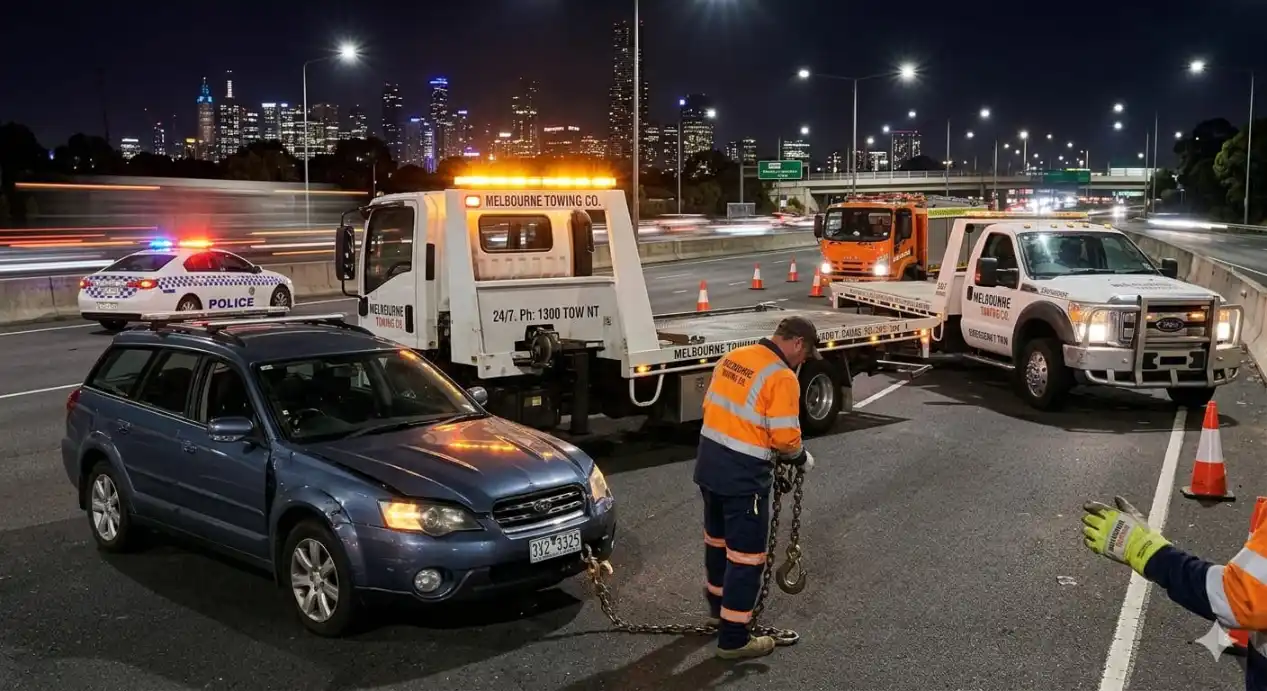
Once the tow truck has arrived at the scene, you will see his flashing, or as they call them, "amber" lights that help to alert traffic and establish a safe buffer zone. A highly-trained Melbourne tow truck driver will conduct a comprehensive, yet speedy, evaluation on-site before touching your vehicle. They will assess the position of the vehicle, inspect for fluids (oil or coolant) and decide the best way to load. A common practice is to use a tilt-tray tow truck (flatbed) on most modern light vehicles. The tray slides down to the ground, and a heavy duty winch slowly-loads your vehicle onto the safe platform. All four wheels remain off the ground which prevents any damage to the drivetrain during transportation; especially important for all-wheel-drive and automatic vehicles.
Documenting and Melbourne Towing Regulations: understanding the rules.
The towing sector is regulated thoroughly in Victoria to ensure consumers are not targeted with predatory tactics, particularly at accident sites. A legal exchange needs to take place before the load is put on the vehicle.
- Victorian law stipulates that an "Authority to Tow" form must be signed by the driver for an accident-related towing. This document is a formal request from you to let the operator move your vehicle. It clearly specifies the destination of the car and the regulated standard tariffs.
- Don't fall for “Chaser” Towing: If a tow truck contacts you when they see your accident and is not officially dispatched, it is one of those “chaser” tow trucks, and you shouldn't deal with them. The company's business license, tow truck license numbers and clear-cut paperwork will be visible before a legitimate company loads your vehicle.
- Straightforward Pricing Model: A good operator will spell out the cost elements, including a base hook-up fee, a rate for each kilometre of transport and any additional overnight or weekend charges. Make sure that you have discussed the destination and the initial price before committing to anything.
Transport and Drop-off Protocols
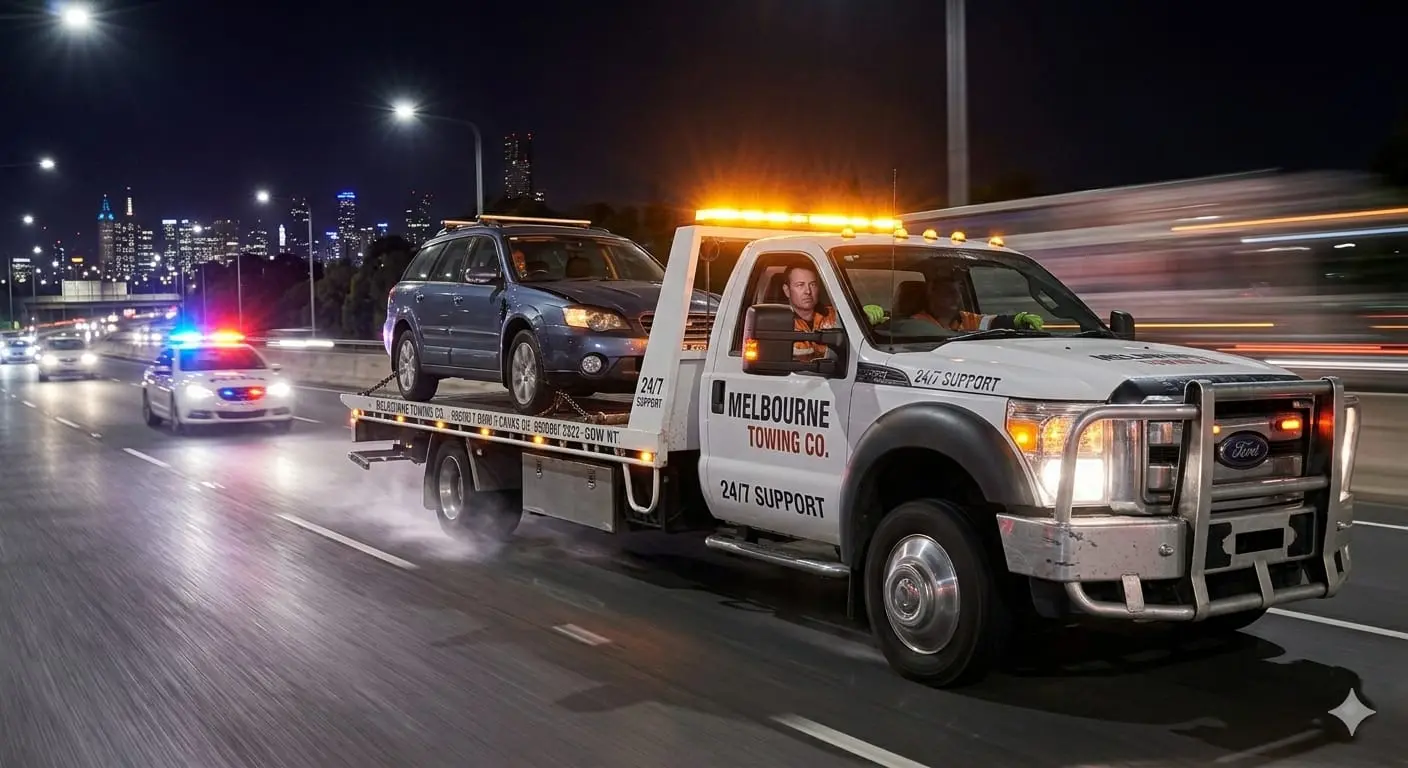
After the vehicle is firmly tied and strapped to the flatbed the journey starts. It will depend on what you need for your car in the long run and the insurance coverage that you have, where will you park it?
- Your Preferred Mechanical Workshop: If it's a regular mechanical issue within business hours, you may arrange the vehicle directly right to your favored local mechanic.
- Rental of Approved Insurance Holding Yard: After an accident, you might find that the insurance company will tell you where your car should be towed to for assessment – the approved holding yard.
- A Safe Overnight Storage Area: When your car breaks down during night time or public holidays the towing service will take you to their own safe and secured holding yard that has a security monitor. It will be safely stored there until it can be reassigned to a repair shop on the next business day.
Many towing companies will operate with the driver (and possibly a passenger) in the cab of the tow truck to the location depending on the cabin space and regulations in the area. If that is not feasible, with sufficient passenger volume, the operator will facilitate a rideshare or taxi transfer to avoid being stranded.
Common questions and answers (FAQs)
Answers to common questions about emergency towing calls in Melbourne.
How long does it usually take for an emergency tow truck to arrive in Melbourne?
Responding times in the Melbourne metropolitan area are normally 30-45 minutes. But, depending on the time of the day, traffic jams, bad weather and how close you are to a major arterial hub, arrival times vary. An updated, current Estimated Time of Arrival (ETA) will be given by the dispatcher at booking.
If I have a 4x4 (AWD), can it be towed on 2 wheels?
The transmission/differential systems can be seriously damaged and permanently ruined if they are towed in AWD or conventional automatic transmission vehicles using only two of the wheels on the road. High-quality tow trucks in Melbourne typically have a specialised tilt-tray flatbed truck so they can keep all four wheels off the floor when towing.
If my car breaks down at a toll road, such as Citylink or Eastlink, in Melbourne what happens?
The road operators will use CCTV monitoring to locate the incident response units when it comes to a breakdown on a toll road. They will use their own special vehicles to take you to a safe integration area or a breakdown bay. Then the company you selected to do independent towing can hook up the car legally and move it to your destination.