As a group, all-wheel drive (AWD) and four-wheel drive (4WD) cars differ from most 2WD models and require more careful towing. Undesirable movement can occur through the transmission, transfer case, or differentials because their drivetrains connect multiple wheels, allowing the wrong wheels to turn. Can a tow truck tow an AWD vehicle? Certainly, but it depends on the vehicle, the manufacturer's instructions, and the vehicle's condition.
An AWD vehicle requires all four wheels to be off the ground to align them with the off-center hook. For some models, the wheel lift mechanism is located in the middle, so a dollied flatbed is used for AWD vehicles. Hyundai and Kia offer this advice for models with AWD systems, while Mazda cautions that improper towing and handling can damage the drivetrain.
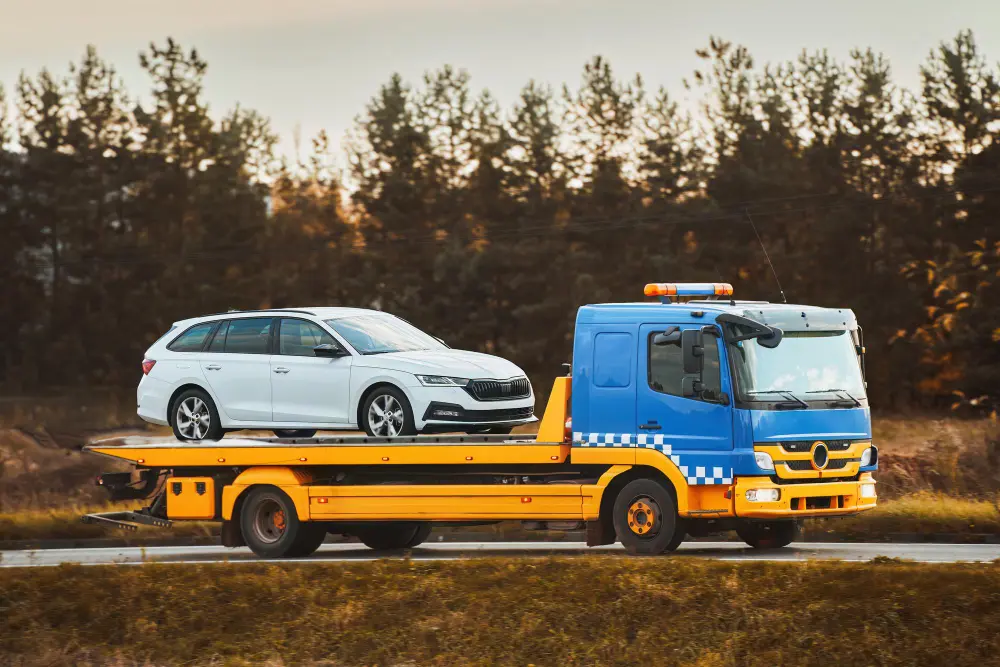
Why can some AWD (all-wheel drive) vehicles not be towed using the wheel lift?
One end is lifted on the wheel lift, while the other wheels remain on the road surface. When all wheels must be off the road to rotate connected drivetrain parts, two wheels can be left on the road. The same trade-off is explained in our guide to flatbed vs wheel-lift towing.
The procedure may differ by model year and transmission, so the operator must read the vehicle-specific instructions.
Important considerations include:
- Road-wheel rotation: Connected AWD parts can rotate along the road wheels, if applicable.
- Manufacturer restrictions: Applies where there is a manufacturer restriction, for all four wheels to be off the ground when transporting.
- Dollies: If they feel it is safe to be used, they can prevent the wheels from rolling, as long as the manufacturer does not prohibit this.
- Damage to vehicle: If wheels, steering, or suspension are damaged, it may not be suitable to lift a vehicle (where appropriate).
Exceptions for differences in models, AWD, 4WD, and electrified systems (as applicable) may require different towing procedures.
What Does the Owner's Manual Recommend?
Your owner's manual is the most valuable resource for your individual car. Under “Towing”, “Emergency Towing” or “Transporting the Vehicle”. It can specify which wheels should be raised, whether dollies are needed, any transmission neutral requirement, and any speed or distance restrictions.
Every AWD or 4WD vehicle has its own procedure. For example, according to Ford, all wheels must be off the ground when using a wheel lift and dollies/flatbed equipment for handling AWD/4WD vehicles. The emergency towing call process explains how to tell dispatch what you drive.
What Information Should You Give the Towing Operator?
Before truck arrival, provide:
- Vehicle information: Make, model, and model year (if applicable).
- Drivetrain: AWD/full-time 4WD (depending on the vehicle).
- Manual guidance: Applicable tow advice from the vehicle manufacturer's handbook (if one has been provided).
- Vehicle condition: Damaged wheels, tires, suspension, steering, or underbody components if there is one to be seen.
Giving those details up front is also what keeps a professional vehicle recovery predictable rather than improvised.
What else can impact the towing approach?
In addition, the operator should be familiar with:
- Transmission status: Where appropriate, Neutral can be selected, and the battery is operating.
- Parking brake: If locked, whether it can be normally released; apply where applicable.
- Narrow driveways/angulations, garages, and basements (if applicable).
Does Incorrect Towing Damage the Drivetrain?
Yes. Depending on the tow and the vehicle, improper towing can damage the drivetrain. If the wheels turn when they are not supposed to, components may be under load or moving while towing outside the manufacturer's permissible boundaries. The repair bills that follow towing AWD incorrectly are almost always larger than the tow itself.
Mazda and Kia caution that mis-towing, advertising, or discussing AWD can cause severe damage to the drivetrain or AWD system.
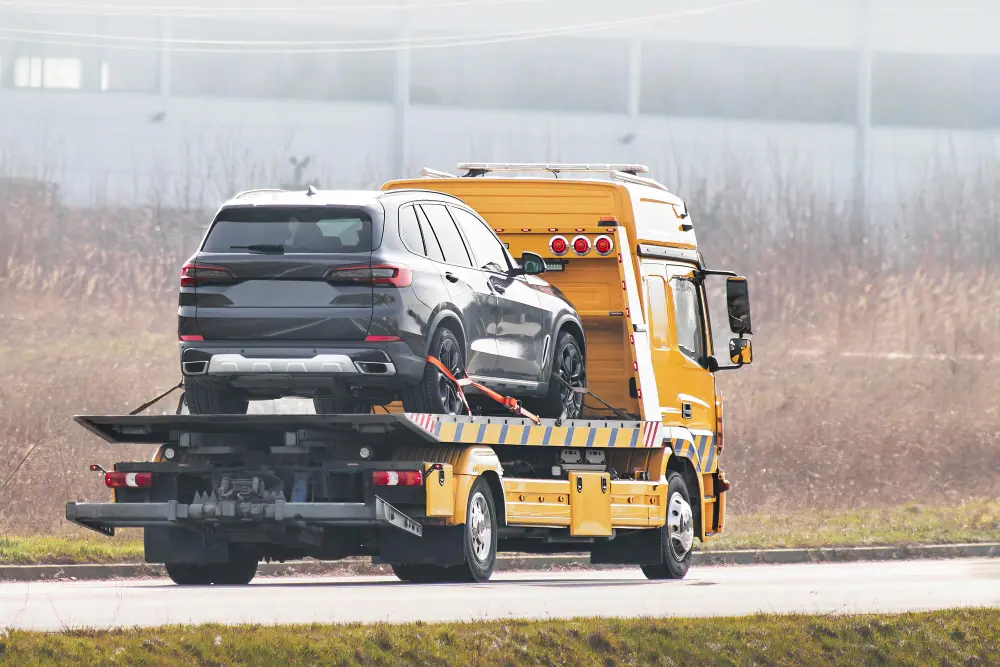
When is a Flatbed Towing Necessary?
Not all AWD cars need a flatbed. Some accept wheel lift with dollies, some don't, depending on the condition of the vehicle and in the manual.
For those traveling in Melbourne by car, towing in a flatbed Melbourne may be a simple solution when all wheels have to stay off the ground.
A flatbed is a specially designed one used when:
- It is essential for the manual: Carry out all instructions set forth by the vehicle manufacturer exactly as specified, if applicable.
- Damage to drivetrain exists: Be careful not to turn wheels unnecessarily during transportation where applicable.
- Wheel or suspension damage: Where applicable, lifting a wheel might not be recommended.
- The parking brake is not releasing: Normal rolling may not be possible during loading (where applicable).
- When the procedure is not defined: If the requirements are unclear, full-vehicle transport can be done without making the wrong choices about wheel positioning.
- Accident damage is an issue: Hidden steering, suspension, or underbody damage can affect towing when applicable.
- Secure loading: The carrier must securely load the vehicle following proper loading & tie down procedure.
The same reasoning is why flatbed towing protects luxury vehicles from drivetrain and clearance damage.
Australian Wide Distribution (AWD) SUV Breakdown Story Melbourne
Sarah a driver in Melbourne who pulled over for mechanical problems to his AWD vehicle. She thought a standard wheel-lift truck could lift the front wheels and haul them away.
She requested emergency towing in Melbourne because the SUV could not be driven and was AWD. The operator determined to use the proper equipment after checking the tow vehicle for the model. As unnecessary wheel rotation was not desirable, the SUV was moved in a manner that avoided damaging the drivetrain.
This example will illustrate why it is important to know the drivetrain before you deploy. Proper vehicle information can minimize the risk of an inappropriate tow.
What is the correct preparation of AWD's / 4WD's?
But it's not always as easy as choosing Neutral. Some vehicles may have different requirements for the park brake, transfer case, steering, engine, or securing points. Report a flat battery, locked steering, or inability to select Neutral before loading, and confirm the operator has a suitable tilt-tray tow truck.
The operator is to check:
- Transmission: If specified, follow the manufacturer's specified Neutral procedure before loading, if applicable.
- Transfer case: Use recommended 4WD transfer case settings, as applicable.
- Parking brake: Check if the brake can be released before moving (if applicable).
- Steering: See if it is unlocked, responsive, and controllable, if appropriate.
- Securement: Use suitable approved tie-down points for safe transport, where applicable.
- Wheels: Check all wheels for flats, locks, and/or damage before loading (if available).
- Clearance: Cover bumpers, bodywork, and/or underbody parts when loading, if applicable.
- Loading route: Check for obstacles, ramps, or slopes before positioning the vehicle.
FAQ
Common questions about towing an AWD car and when a flatbed is required.
Can a tow truck tow an all wheel drive?
Yes, but the method must follow the manufacturer's instructions. AWD models need all four wheels lifted.
Is it safer to move an AWD vehicle using flatbeds?
As all wheels stay off the road, a flatbed may be suitable. This is only applicable if the vehicle/condition requires it.
Is it possible to tow AWD the wrong way so that it could harm the transmission?
Yes. If towed improperly, the transmission, transfer case, differentials, or AWD drive system can be damaged.
If I inform the towing company that I have an all-wheel drive system mounted in my vehicle?
Yes. This helps the operator choose the right equipment and follow the correct procedure.
This isn't the same as 4WD towing.
Not all 4WD systems are the same, and transfer cases and selectable modes have different requirements.
Final thoughts
The best practice for towing an AWD car is to avoid assumptions. AWD/4WD systems vary, and procedures depend on the drivetrain type, manufacturer instructions, and the vehicle's condition and equipment. This makes the value of manufacturer guidelines clear. It is, as such, an example of how crucial manufacturer guidance is for AWD towing.
If the vehicle's wheels must stay off the pavement, flatbed towing can be an easy way to get the job done in Melbourne. Any manufacturer that allows wheel lift with dollies should do so as follows. Before booking, it is worth checking current car towing prices in Melbourne.
Emergency towing Melbourne should not only transport the vehicle, but also keep it safe in case of a breakdown or an accident.