It is Tuesday morning at 2:15 AM and a rainy night. A hydroplaning, skidding delivery van gently rolls onto the median strip on the western side of the road with its engine stopped. At the same time, an angry homeowner notices a vehicle which he does not recognize in his driveway in a narrow residential street in Richmond. Meanwhile, as they were out in the dark lane past Dandenong, a family sedan began to blow its radiator.
As everyone else sleeps, the nerve center of a professional 24-hour towing service remains awake, active and performing a complex logistical dance. The dispatch room is the innermost pump in the roadside assistance system. A modern Melbourne towing dispatcher is more than a phone host; he or she's an air traffic controller, crisis counselor, and expert on the neighborhood.
Come along and find out how a high-volume emergency transportation works 24/7!
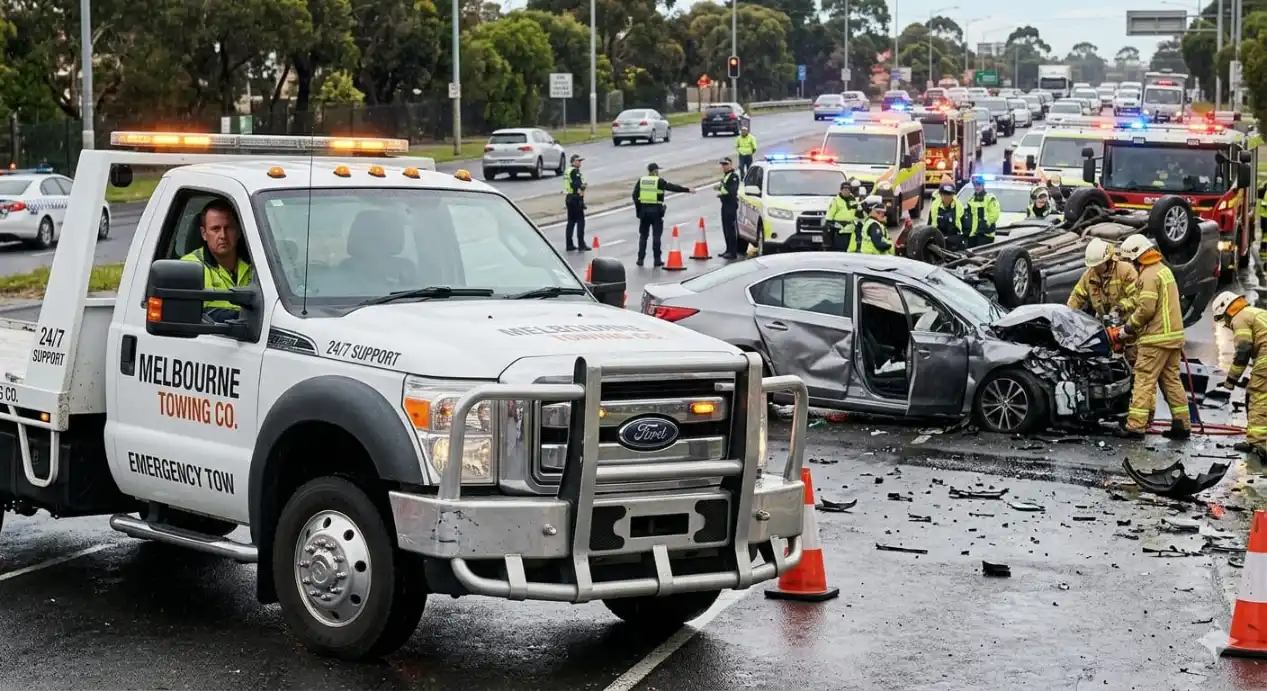
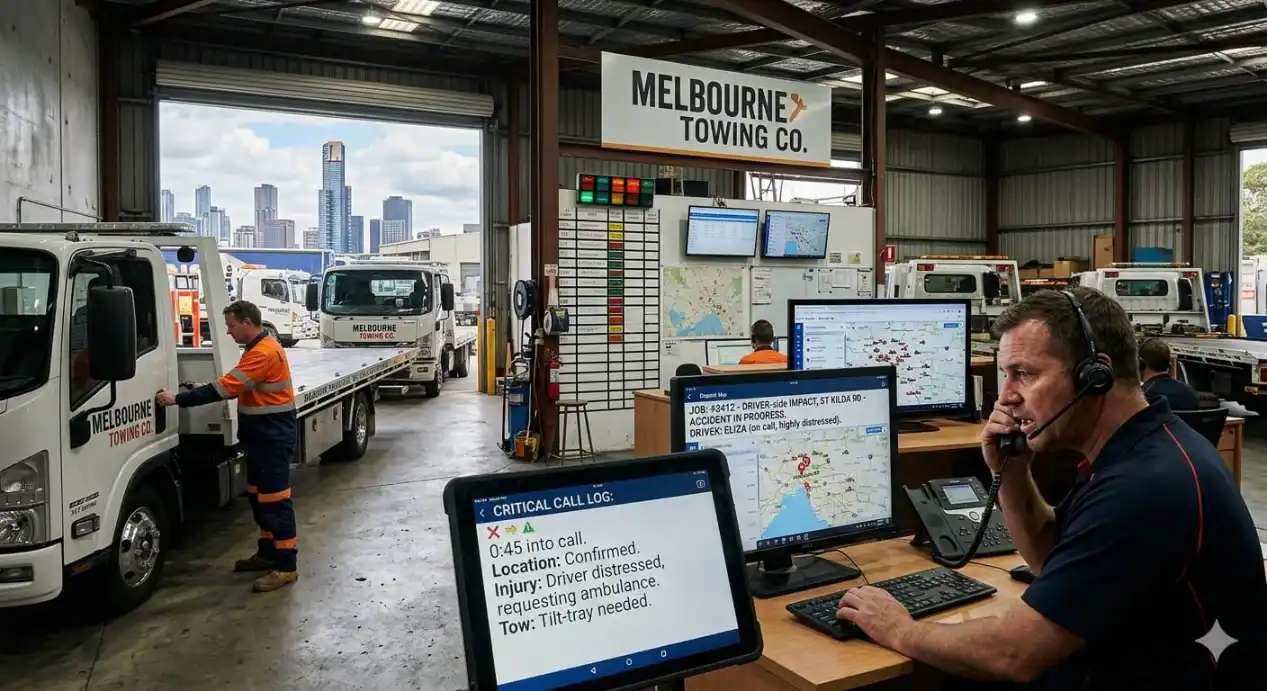
The Nervous System: Inside the Dispatch Command Center
Step inside a top-tier Melbourne towing dispatch, and you'll see screens lining the walls as the Dispatch Command Center at the heart of the operation. It's not just an ordinary office, it's a state-of-the-art command center with advanced GPS tracking, real-time traffic updates, and custom scheduling software.
Each tow truck, from the exact location to the exact meter, is mapped in the active fleet. Traffic dispatchers can quickly determine which trucks are available, which trucks are loading up a vehicle and which trucks are on the way to a drop-off yard.
Most importantly, these systems are connected to real-time data from Melbourne's key traffic intersections. Known choke points such as the West Gate Bridge, Burnley Tunnel and the many construction sites around the outer suburbs continue to be monitored by dispatchers. If there's a call from Footscray, the call centre will bypass a truck queuing up in traffic on the Bolte Bridge and instead dispatch a driver that's already working west of the Maribyrnong River.
Triage Under Pressure: Managing the Incoming Call Queue
Not every tow call is equal: Manage the incoming call queue. As the phone lines go bright, dispatchers are tasked with quickly and effectively implementing a triage system to keep the public safe and using resources effectively.
Priority 1: Immediate Danger (Red Alert): A vehicle that is stuck in a live lane on the Monash Freeway or is stuck on a blind crest in the Yarra Valley during peak hour is a safety emergency. These are immediately marked by dispatchers who guide the caller on urgent safety measures and then they are able to direct the nearest tilt-tray truck.
The second level of priority (Yellow Alert) would apply to a single person who has broken down at 3 AM in a different industrial estate, to a driver who has no other cars with them, or to a parent whose young toddlers have become stranded on the side of the road.
Priority 3: Scheduled & Non-Urgent Transport (Green Alert): Transporting a classic car from a St Kilda garage to an exhibition or moving a forklift from a construction site on Box Hill to another is scheduled into time periods when there are no active emergencies.
The Human Element: Calming the Storm
When people contact an emergency tow truck service they're not in a good mood. They may be stressed, frustrated, angry or upset following a minor collision. The first thing that the dispatcher must do is manage their emotions. A professional operator calms down the panic by using a calm and controlled voice before asking for the credit card or policy number. They promise the driver that they are coming to their assistance, if the driver is in shock, they take them through breathing steps, and they explain with clarity, where the driver should be standing to be safe while waiting for help.
Only when the driver is calm do dispatchers collect all the crucial factors: vehicle weight, modified low clearance problems, all-wheel-drive configuration, and precise intersection landmarks.
Midnight Logistics: Coordinating with Melbourne Emergency Services
One part of the job of dispatching on night shifts is to liaise with Victoria Police, Ambulance Victoria and VicRoads incident response teams.
If a major accident happens on a metro road, then there is a need for the roadway to be cleared as soon as possible to avoid secondary accidents and to reopen the roadway for traffic. The dispatch team works hand-in-hand with these agencies. If there's a multi-car pileup, they coordinate the simultaneous arrival of multiple trucks, using the right specialized equipment, like heavy duty under-lift wreckers for commercial trucks, the first time.
In addition, dispatchers need to make sure of compliance with Victorian accident towing laws. They check the proper licensing of the assigned drivers for the active accident scene, ensuring a complete legal compliance when under pressure.
The Fleet Hand-off: Supporting the Drivers in the Field
Once a truck has been dispatched, the dispatcher's job isn't finished. They are the driver's eyes and ears all mission long.
The driver of the tow truck is driving through a road that is either dark at night or has rough weather, and the dispatcher is tracking the driver's progress. When a driver reaches a location, and the vehicle is so deeply stuck in a low clearance underground parking lot that there is less than 2.1 meters of space between the roof and ground, the dispatcher instructs the driver to call for a low-profile specialized tow truck.
They are also able to monitor driver fatigue. The ability to focus and be physically strong are essential when operating a tilt-tray truck. Shift hours are closely tracked to ensure drivers are taking mandatory rest breaks ensuring everyone on Melbourne roads is safe. The morning shift handover is a critical transition time for the dispatch room; as dawn breaks, the early morning peak hour traffic starts to ramp up on the Eastern Freeway and Tullamarine, the dispatch room switches shifts and the whole operation must run seamlessly.
It is essential to have a seamless handover, so that no stranded driver or scheduled vehicle transport is missed.
Active En-Route Missions: Any trucks in transit to a breakdown or midway through a long distance trip around regional Victoria during the night shift.
Vehicles in Secure Holding Yards: A complete inventory of vehicles towed over the weekend that are now in the company's secure holding yard, while waiting for insurance appraisers or to be moved to local smash repair facilities.
Impending Peak Hour Strategy: Modifying the location of trucks in response to early morning closures, transit lane changes and known areas of risk for breakdowns at key intersections throughout Melbourne.
This challenging management regime means the fleet is fully operational, constantly providing a seamless, uninterrupted safety cover for Melbourne motorists around the clock, 365 days a year.
Common questions and answers (FAQs)
Answers to common questions about how Melbourne's 24-hour towing dispatch service works.
Can I ask a dispatcher on the phone “How much is my tow going to cost?”
Yes. In the case of standard mechanical breakdowns, road side assistance or vehicle transfers, they will give you an accurate, up front quote before the call to send the truck. This usually consists of a fixed call-out charge and an hourly rate. When it comes to accident towing, fees are precisely regulated by Victorian state law and the dispatcher will gladly tell you.
What if I do not know the name of the street or suburb, how does the dispatcher find me?
Today's dispatch centers are advanced, using top-of-the-line location-sharing technology. The dispatcher can also send a secure SMS link to your mobile phone if you become lost on a long highway or if you're on an unfamiliar backroad. In just one click, your phone sends your exact GPS location right into the dispatch mapping software and a truck goes directly to your location.
Are there major public holidays, such as New Year's Eve, that the 24-hour dispatch service is in operation?
Absolutely. Road emergencies, breakdowns and crashes don't take holidays, and neither does the dispatch team. You can always rely on a local professional to respond when you get in trouble with your Melbourne car, as the command centre is staffed 24/7, 365 days a year.