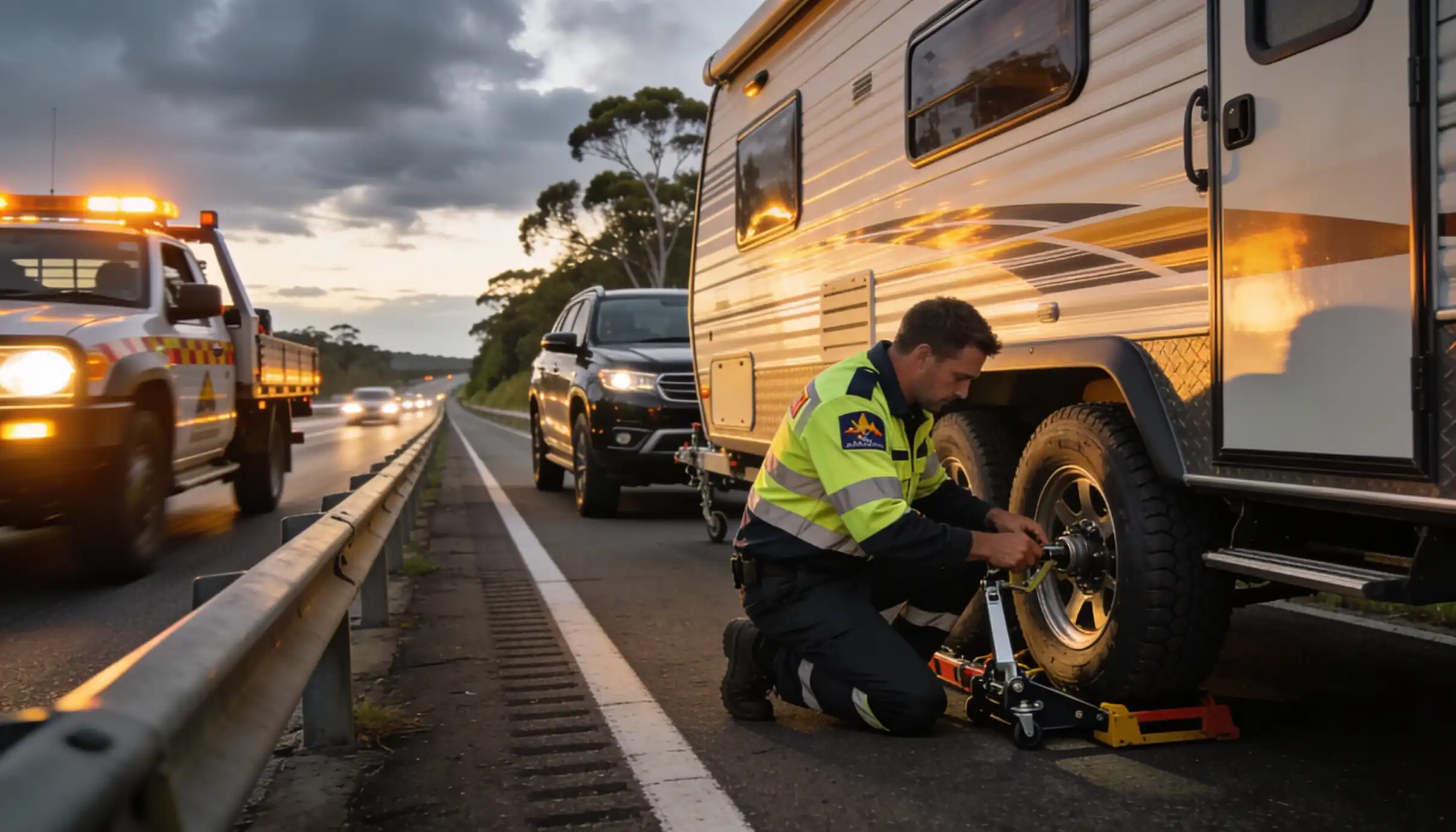
Towing a caravan looks easy when everything is going smoothly. Then a strong crosswind hits on the Hume, a trailer starts swaying near Ballarat, or a loaded van suddenly feels unstable while braking on the Monash. That’s when things can turn dangerous fast. Recent police warning caravan safety alerts across Australia are not just about fines or roadside inspections. They’re about serious crashes, overloaded vans, inexperienced drivers, and towing setups that were never safe to begin with. And honestly, towing operators across Melbourne are seeing the same thing on the roadside every holiday season. A lot of drivers buy bigger caravans without fully understanding towing capacity, weight distribution, or how quickly caravan sway can get out of control. Some assume their SUV can handle the load because the dealer said it could. Others pack too much gear into the rear of the van and unknowingly create a dangerous setup. This guide breaks down what Melbourne drivers actually need to know before towing a caravan. Not just the legal stuff. The real-world problems that lead to breakdowns, accidents, and emergency towing callouts across Victoria every week.
Why Police Are Warning Caravan Owners Across Australia
Police are increasingly stopping caravans during roadside checks because unsafe towing setups have become far more common. And it’s not always obvious which caravans are overloaded until they’re inspected properly. One of the biggest problems is drivers exceeding their vehicle’s towing capacity. Many people only look at the advertised towing number online, but they forget about passengers, luggage, fuel weight, bull bars, toolboxes, and roof racks. Once all that extra weight adds up, the vehicle may already be over its legal limit before the caravan is even attached. Another issue is poor weight distribution. Heavy items placed too far back in a caravan can trigger caravan sway at highway speeds. Experienced towing operators often say the first signs appear during overtaking or strong side winds. The van begins moving slightly side to side, then suddenly becomes difficult to control. Around Melbourne, risky towing setups are especially noticeable during long weekends and school holidays when first-time caravan owners head toward regional Victoria or the coast. And when something goes wrong, it usually goes wrong quickly. If your caravan feels unstable, bounces excessively, or pulls awkwardly while braking, it’s worth getting it checked before your next trip. Many stranded drivers end up needing emergency help from Car Towing Melbourne after small towing problems become full roadside breakdowns.
The Caravan Safety Mistakes Police See Most Often
Overloaded Caravans
This is probably the most common issue. Drivers pack generators, bikes, water tanks, camping gear, extra batteries, and tool kits without realising how much weight they’re carrying.
An overloaded caravan affects:
- braking distance
- steering control
- tyre temperature
- fuel usage
- suspension performance
And on Victorian highways, especially during summer heat, overloaded caravans are far more likely to suffer tyre blowouts or sway problems. A good rule many towing professionals follow is simple: if your vehicle feels heavy, sluggish, or unstable during acceleration or braking, there’s a decent chance your setup needs rechecking.
Ignoring Tow Ball Weight
Many beginners focus only on total caravan weight. But tow ball weight matters just as much. Too little weight on the tow ball often causes dangerous sway. Too much can overload the rear suspension and reduce steering control.
You can usually spot poor tow balance when:
- the rear of the vehicle sags
- steering feels light
- the caravan “pushes” the vehicle downhill
- sway appears above 80km/h
This catches many Melbourne drivers off guard because the setup may feel fine around suburban streets but becomes unstable on open freeways.
Poor Tyre and Brake Checks
Tow vehicles work much harder while hauling caravans. Tyres heat up faster. Brakes wear quicker. Suspension takes more punishment. Yet many caravan owners still skip basic inspections before heading out. Towing operators regularly attend breakdowns caused by:
- underinflated tyres
- cracked caravan tyres
- brake failures
- faulty trailer lights
- worn wheel bearings
And unfortunately, many of these issues could have been avoided with a simple pre-trip inspection.
What To Do If Your Caravan Starts Swaying
One of the worst mistakes drivers make is braking suddenly when sway begins. That usually makes the movement worse.
Instead:
- 1Keep the steering straight
- 2Ease off the accelerator slowly
- 3Avoid sharp corrections
- 4Let the vehicle gradually slow down
- 5Pull over safely once stable
Experienced caravan drivers often describe sway as a “snake-like pull” from the rear of the vehicle. If you feel that movement, don’t panic. Sudden steering inputs are usually what trigger rollovers.
High-risk areas around Victoria include:
- Hume Freeway overtaking lanes
- Great Ocean Road crosswinds
- Western Ring Road heavy traffic merges
- regional downhill sections
And if the caravan becomes unsafe to continue towing, calling a professional caravan towing service is often the safest decision rather than trying to limp home. If police direct you to move a hazardous rig, it's worth understanding tow truck rights Victoria gives you in that moment.
Why First-Time Caravan Owners Struggle More
A lot of Australians moved into caravanning recently without prior towing experience. Some are travelling long term. Others bought vans during the travel boom and are still learning basic towing skills. Modern caravans are also heavier than older models. Air conditioning systems, solar batteries, water tanks, and larger interiors all add serious weight. One thing experienced towing professionals notice is that many drivers practice towing only in perfect conditions. Then their first real challenge happens during rain, heavy traffic, steep descents, or emergency braking.
That’s why experienced caravan owners recommend:
- practising reversing before long trips
- learning how the caravan reacts under braking
- testing towing stability at safe speeds
- sharing driving responsibilities with another licensed driver
Fatigue also becomes a major issue on long Victorian drives. If only one person can tow confidently, the risks rise significantly during emergencies.
Caravan Towing Problems vs Safe Towing Habits
| Unsafe Towing Habit | Safer Alternative |
|---|---|
| Guessing towing capacity | Check manufacturer towing limits |
| Loading heavy gear at rear | Keep heavy items low and near axle |
| Ignoring tyre pressure | Inspect tyres before every trip |
| Sudden braking during sway | Gradually reduce speed calmly |
| Skipping brake inspections | Service caravan brakes regularly |
| One driver handling all towing | Share towing duties when possible |
If you need the basics behind manufacturer limits, read what is braked towing capacity before loading a caravan for a long drive.
When You Should Call a Towing Service
Not every caravan issue can be fixed roadside. Some situations become too risky to continue driving safely.
Professional towing help may be needed if:
- caravan sway keeps returning
- brakes stop responding correctly
- tyres fail repeatedly
- wheel bearings overheat
- the caravan becomes unstable after loading
- an accident damages the towing setup
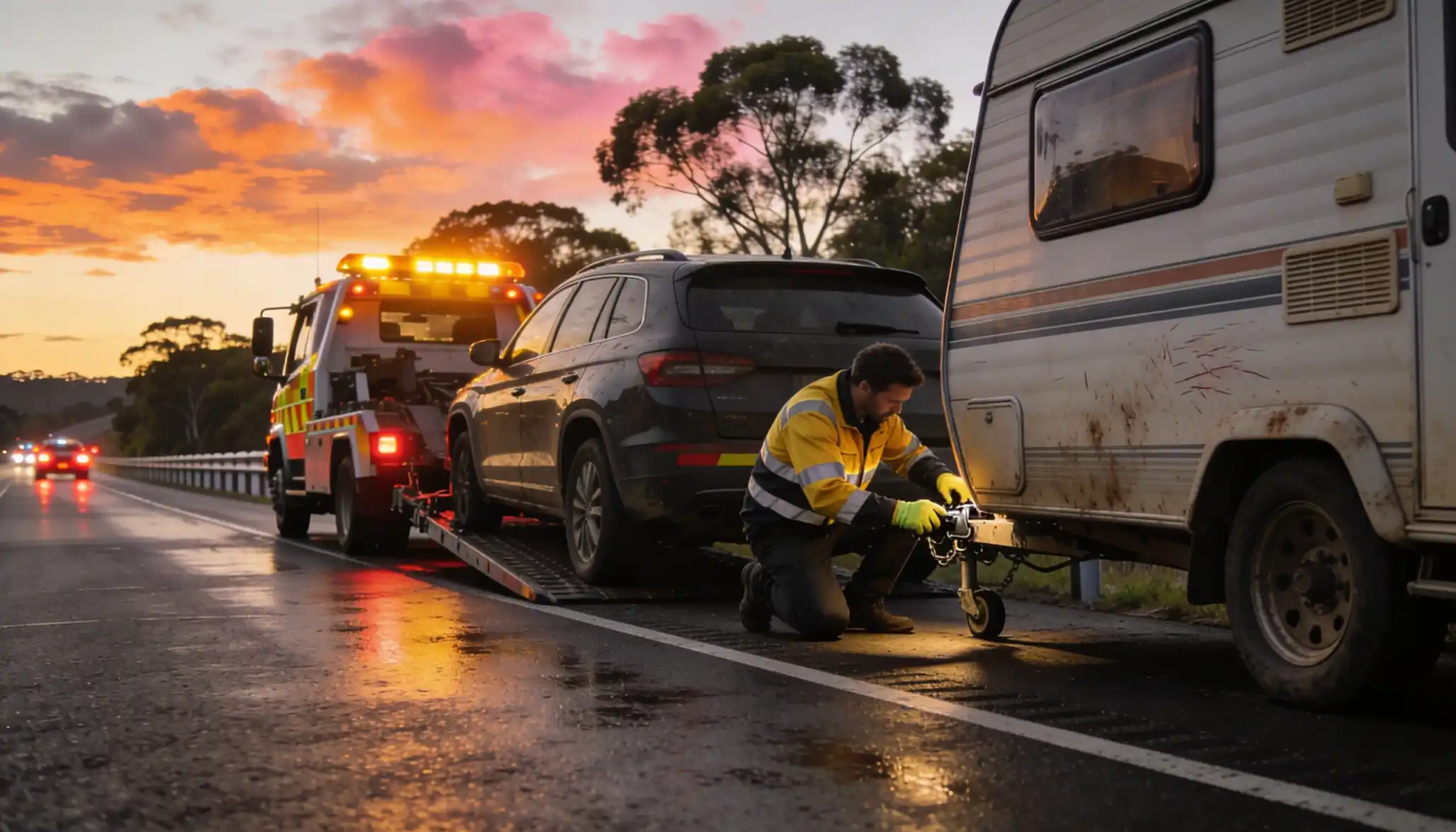
Around Melbourne, breakdowns involving caravans often happen late at night, during holiday traffic, or on regional highways far from repair centres. Trying to continue towing an unsafe caravan usually makes the damage worse. That’s why many drivers prefer contacting caravan towing service before a small towing problem turns into a dangerous roadside situation. Quick recovery support can prevent further vehicle damage and reduce risks for everyone else on the road.
FAQ
Answers to common caravan safety, weight check, sway, and emergency towing questions for Melbourne drivers.
Can police stop caravans in Victoria for weight checks?
Yes. Police can stop caravan they believe may be overloaded or unsafe. Drivers can get fines, defects, or insurance issues if towing laws are not follow properly.
How do I know if my caravan is overloaded?
Signs include poor braking, rear vehicle sagging, unstable steering, tyre overheating, or sway at highway speeds. A public weighbridge can confirm total weight.
What causes caravan sway while driving?
Common mistakes include poor weight distribution, crosswinds, speeding, incorrect tyre pressure, and insufficient tow ball weight.
Is caravan towing harder on Melbourne freeways?
It can be. Heavy traffic, sudden lane changes, strong winds, and long highway stretches increase towing risks, especially for inexperienced drivers.
When I should call a towing service for my caravan?
If your caravan becomes unstable, suffers brake issues, tyre failures, or accident damage, professional towing is often the safest option. Car Towing Melbourne can assist with emergency caravan recovery around Melbourne and regional Victoria.
Conclusion
Towing a caravan safely come down to preparation, balance, and knowing your max limits. A few quick inspection before leaving Melbourne can prevent sudden breakdowns, crashes, and expensive repairs later. And if something doesn’t feel right on the road side, getting help from expert towing early is usually the smartest move.