Introduction
You don’t really think about the Australian car industry until something goes wrong on the road. A breakdown on the West Gate Freeway, a car that won’t start in a Brunswick car park, or that sudden warning light in peak-hour traffic can quickly turn a normal day into chaos. And behind those everyday moments sits a bigger story how Australia went from building cars locally to relying almost entirely on imports. The Australian car industry has gone through massive change over the past few decades. Factories that once produced Holden, Ford, and Toyota vehicles are now closed, and the focus has shifted to imports, EVs, and SUVs. In Melbourne, this shift isn’t just history it affects how drivers experience breakdowns, repairs, and towing today. In this article, we’ll break down how the industry evolved, why it changed, and what it actually means for drivers on Melbourne roads right now. You’ll also see how towing services fit into this modern automotive landscape in a way most people don’t really think about until they need help fast If you ever find yourself stuck on a Melbourne road with no idea what to do next, Car Towing Melbourne is one of those local services people often end up relying on when things go sideways. Whether it’s a dead battery in the CBD or a breakdown on a busy freeway, having quick towing support can make a stressful situation a lot easier to manage.
How the Australian Car Industry Went From Local Manufacturing to Imports
Back in the mid-20th century, Australia wasn’t just buying cars it was building them. Brands like Holden and Ford had major manufacturing plants in places like Geelong and Elizabeth, and Toyota also produced vehicles locally for decades. At its peak Australia was manufacturing hundreds of thousands of vehicles every year, supporting a huge workforce and a strong industrial base on it's time. But things stared changing from the 1980s onwards. Imported vehicles from Japan, Korea, and Europe became cheaper and more efficient to produce. Consumers began choosing smaller cars, fuel-efficient cars, and global manufacturers started centralising production overseas. By the 2010s, local manufacturing couldn’t compete, and major plants closed one by one. Today, Australia is fully reliant on imported vehicles. That change didn’t just affect factories it changed the entire driving ecosystem. Spare parts, repair times, and even roadside breakdown response now depend heavily on global supply chains, which is something most drivers only notice when they’re stuck waiting for help.
What the Industry Shift Means for Melbourne Drivers Today
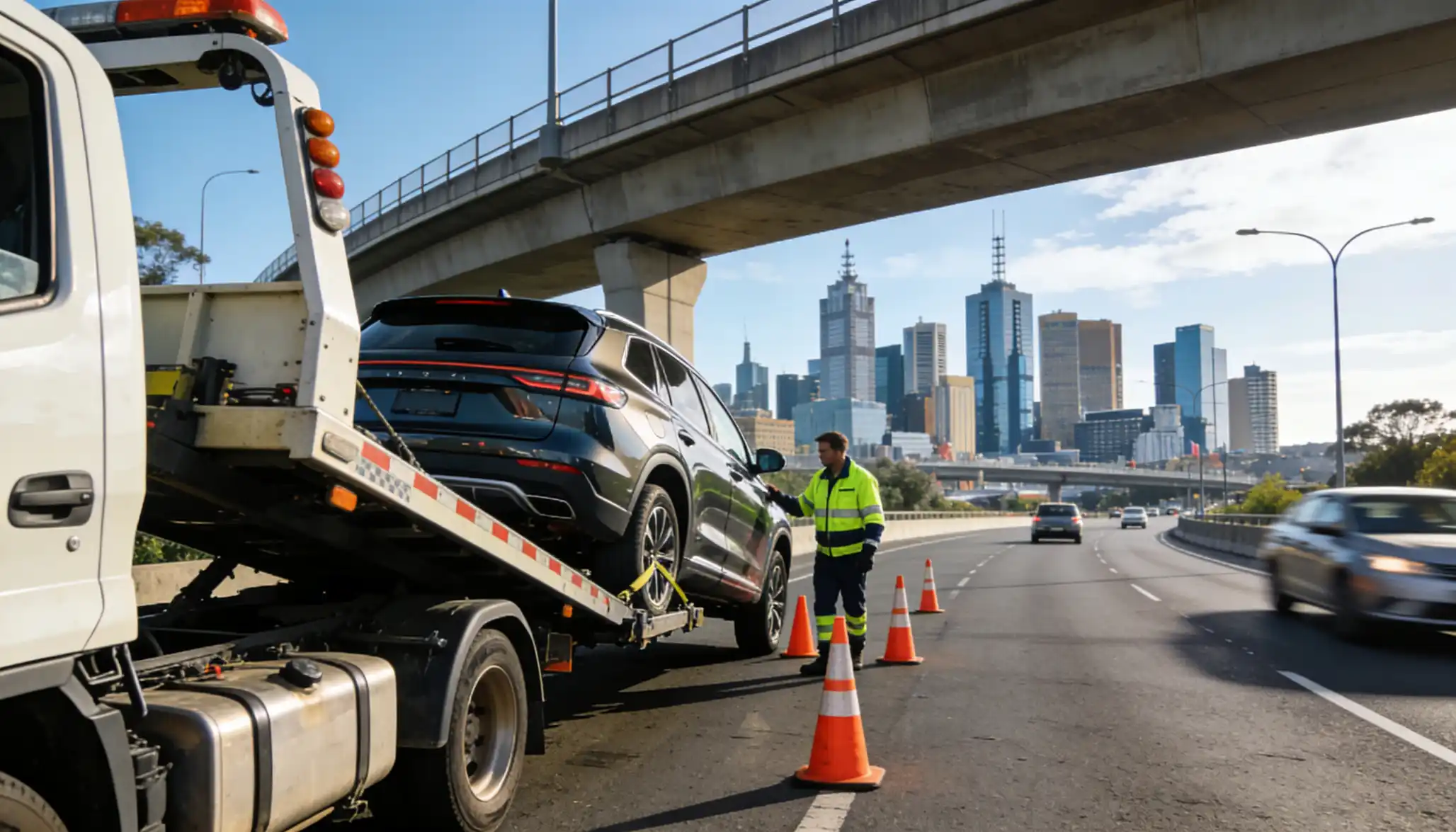
In Melbourne, the effects of the changing car industry show up in very practical ways. Cars are more advanced than ever, but they’re also more dependent on electronics, sensors, and complex systems. That means when something fails, it’s rarely a quick roadside fix. Modern cars often require diagnostic tools just to understand the problem. So instead of a simple jump-start or quick fix, now almost all of breakdowns need towing straight to the workshop. This is one reason towing service demand in Melbourne has grown year by year, especially during peak traffic hours.
Another factor is the rise of SUVs and EVs. Heavier vehicles and electric drivetrains need specialised handling during recovery. Not every roadside situation is straightforward anymore, and drivers often need more structured support when things go wrong on busy roads like CityLink or the Monash Freeway.
The Real Connection Between Car Industry Decline and Towing Demand
It might not be obvious at first, but there’s a direct link between the decline of Australian car manufacturing and the increase in towing needs. When local manufacturing was available, many vehicles shared common vehical parts and simpler mechanical systems. Repairs were often faster and more predictable. Now, with imported vehicles from multiple global brands, there’s a wider mix of technology on Melbourne roads. That diversity makes roadside repairs harder and increases the chance that a vehicle needs to be transported instead of fixed on the spot. There’s also the issue of supply chains. Even a minor part delay can keep a car off the road longer than expected. So when breakdowns happen, emergency towing service becomes the safest and fastest option to get vehicles into proper repair shop. For drivers, this means one thing: roadside situations are less about quick fixes and more about getting professional recovery as efficiently as possible.
Towing Work Now Extends Beyond Passenger Cars
Melbourne's transport needs also extend into warehouses, construction sites, and storage yards. Businesses may need forklift transport in Melbourne when equipment has to move between sites, while container towing services are suited to relocating 20ft containers between commercial locations. These are planned logistics jobs rather than roadside breakdowns, but both depend on suitable loading equipment and secure handling.
Common Breakdown Situations in Melbourne Traffic
Regular breakdown patterns
Melbourne roads are busy, unpredictable, and heavily dependent on peak-hour flow. That combination creates some very common breakdown scenarios. Flat batteries in underground parking, overheating in stop-start traffic, and tyre failures on high-speed freeways are all regular situations drivers face.
Safety comes first
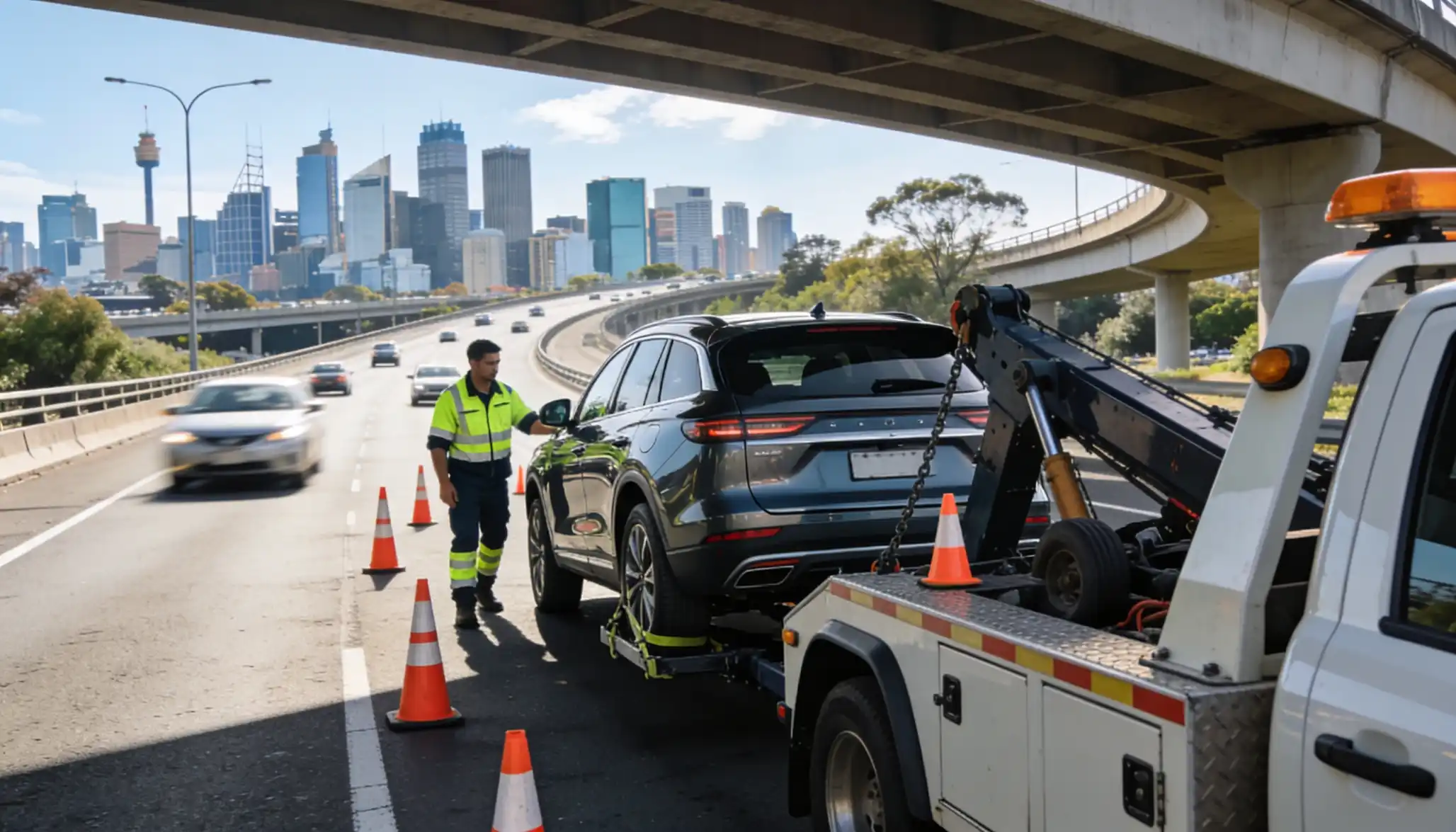
What makes it more stressful today is the environment itself. Breaking down on a road like Punt Road or the West Gate Bridge isn’t just inconvenient it can be dangerous if traffic is heavy and visibility is low. In these cases, waiting for roadside help isn’t just about convenience; it’s about safety.
Most drivers don’t expect these situations until they happen. And when they do, towing becomes the immediate solution rather than a backup plan. That’s why local towing support plays such a big role in how Melbourne drivers manage everyday transport risks. If you want a step-by-step safety response for one of these scenarios, read what to do when your car breaks down in Melbourne.
Comparison of Vehicle Recovery Options in Melbourne
| Option | Best For | Speed | Limitations |
|---|---|---|---|
| Roadside assistance | Minor issues like battery or fuel | Moderate | Cannot handle major breakdowns |
| Mobile mechanic | Small mechanical repairs | Variable | Not suitable for all vehicles |
| Professional towing service | Accidents or major failures | Fast response | Requires transport to workshop |
| DIY towing (risky) | Short emergency moves | Immediate | Unsafe and not recommended |
Need fast towing support in Melbourne?
If your vehicle cannot be safely driven, getting it moved quickly is often the best way to avoid extra risk, traffic stress, and workshop delays.
FAQ
Answers to common questions about the Australian car industry shift, modern breakdowns, and towing in Melbourne.
Why did the Australian car industry shut down?
High making costs, global competition, and cheaper imports led to factories shut down the manufacturing over time.
Does Australia still manufacture any vehicles?
Not a major passenger vehicles manufacturing remains. Australia now relies mostly on imported vehicles.
Why is towing more common in Melbourne now?
Modern cars are hard to understand, so breakdowns often require full towing instead of roadside fixes.
What should I do if my car breaks down in Melbourne traffic?
Move to a safe area if possible and call a local towing service immediately to avoid further risk.
Are EVs harder to tow than regular cars?
Yes, EVs often require special handling due to weight and drivetrain systems, making professional towing important.
Conclusion
The Australian car industry has changed nowadays how we drive and deal with sudden breakdowns. With more complex vehicles and fewer roadside fixes, car towing has become nece in Melbourne. For quick help when things go wrong, roadside assistance in Melbourne Metro planning still matters, but professional towing is often the safest next step.